— 01
The challenge
Sell a feeling, not a spec sheet.
A smart ring is a hard thing to film. The product is tiny, the benefit is invisible, and most tech ads lean on dashboards and notifications. Lumen's promise was the opposite of that: less screen time, more presence. The film had to make calm feel premium and prove the idea without a real shoot, a cast, or a product on hand.
The brief I set: tell one honest story about attention. Show a man closing the laptop and stepping back into his life, with the ring as a quiet companion rather than another device asking for his focus. Keep it cinematic, keep it warm, and produce it fast enough to test the concept before committing a real budget.
— 02
The approach
One pipeline, four tools, a full crew of one.
I treated this like a real production and ran every department myself: writing, art direction, casting, product design, edit, and sound. Each AI tool did the job of a team, and my work was directing them toward a single look and a single feeling. The result reads like a funded brand film, made on a fraction of the time and cost.
 ChatGPTScript & concept
Shaped the story, the shot list, and the on-screen lines. The writing room that kept every scene pointed at one idea: protect your attention.
 MidjourneyArt direction
Designed the character, the product, and the world. Set the golden-hour palette and the film grain look that every frame is graded toward.
 SeedanceMotion
Turned the boards into moving shots, with camera moves and performance that hold a consistent character across the cut.
 ElevenLabsVoice
Voiced the narration. A warm, unhurried read that matches the pace of the picture and lands the closing line.
— 03
Casting
A character you can follow for a full minute.
Before a single shot moved, I locked the lead: face, wardrobe, and the way he carries himself. A reference sheet kept him consistent from the first wide to the closing silhouette, so the film feels cast, not generated.
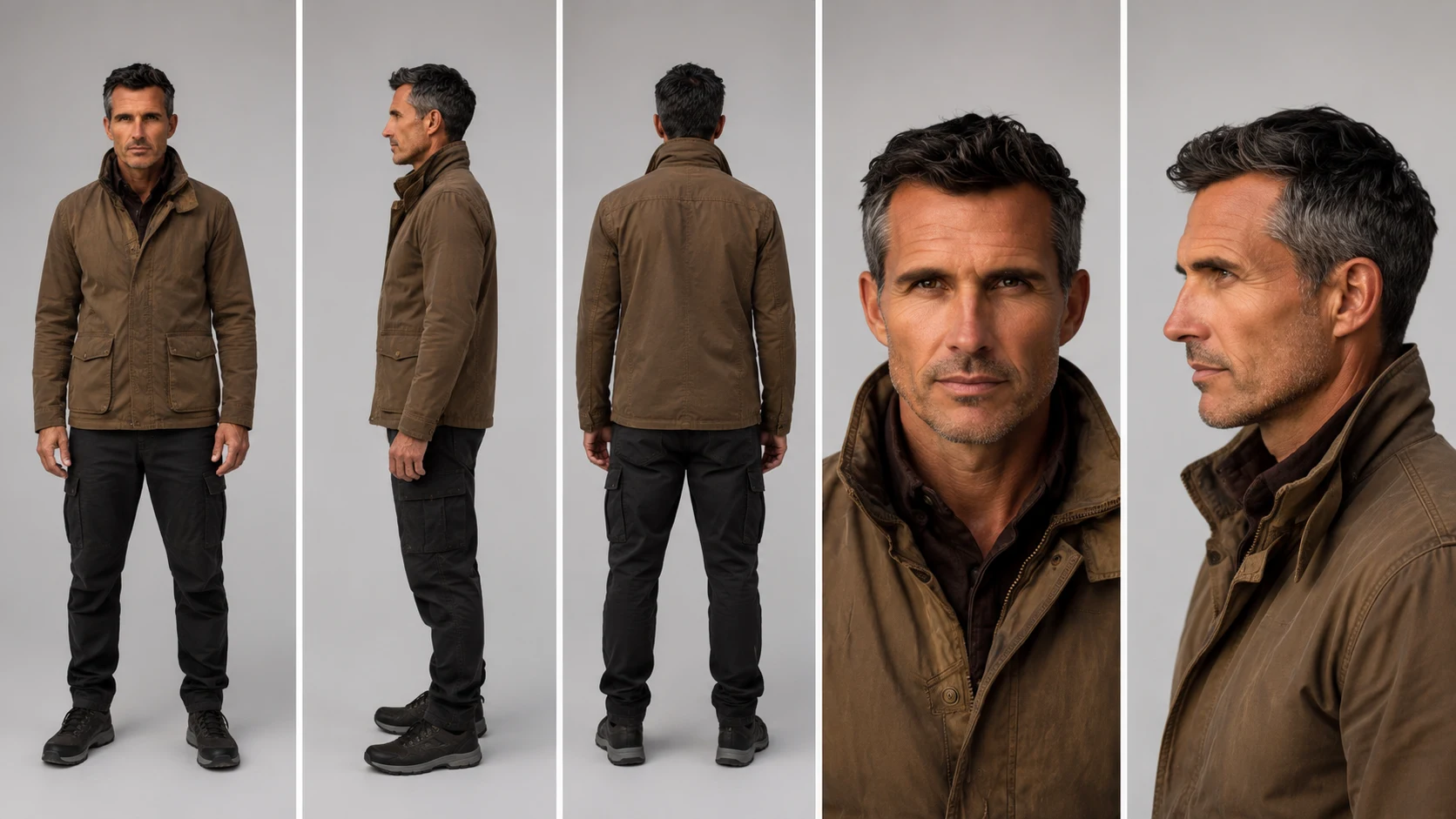
Lead character referenceMidjourney · art direction
— 04
Product
The hero object, from every angle.
The ring needed its own identity: brushed titanium, a warm gold interior, sensors that read as jewelry instead of hardware. A turnaround set the look so the macro shots and the on-hand close-ups all matched the same object.
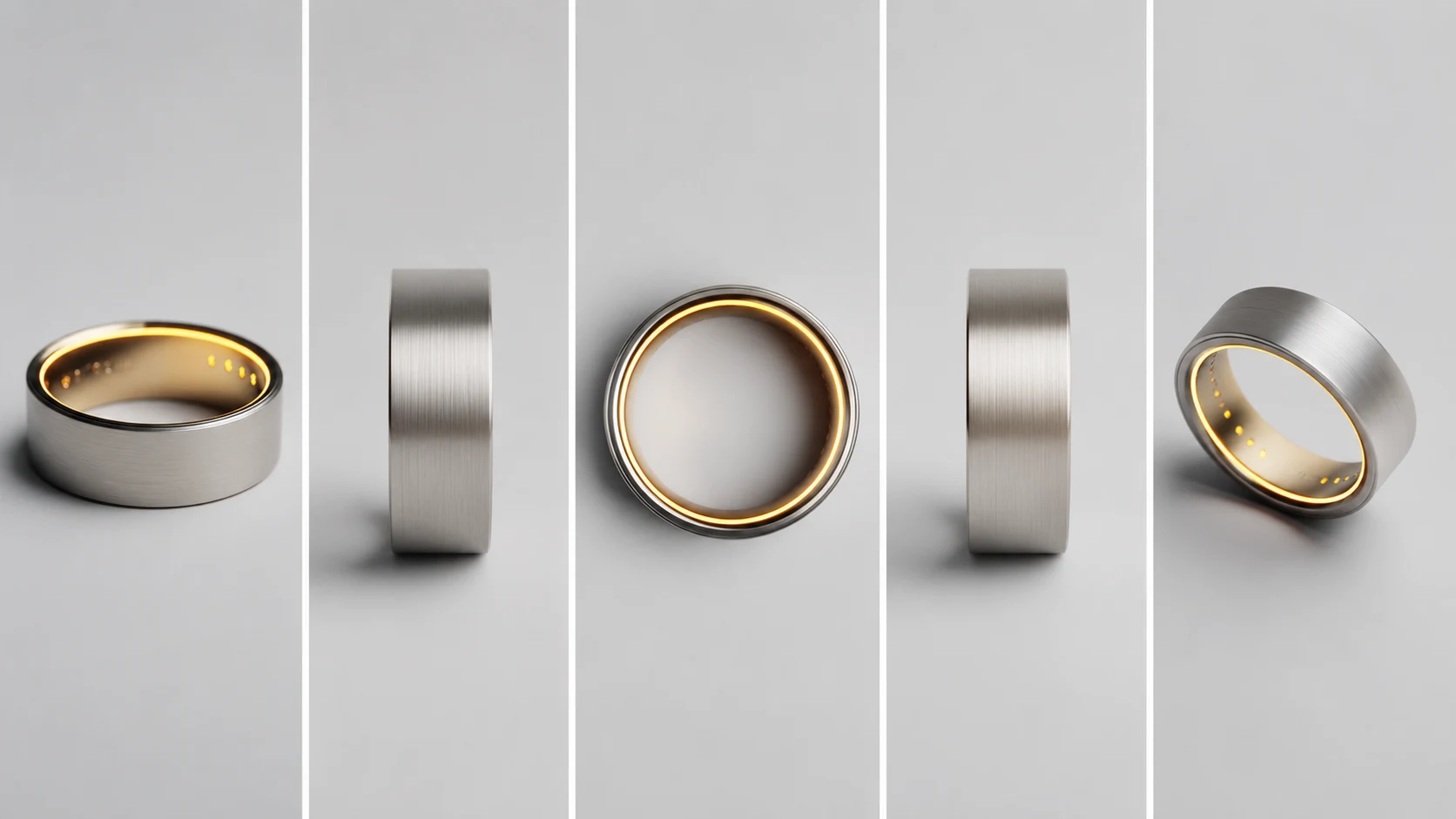
Ring turnaroundMidjourney · product design
— 05
Storyboard
Every shot planned before it moved.
I boarded the film frame by frame: shot type, timing, and a line of intent for each beat. The board doubled as the edit. It set the rhythm, caught problems early, and gave the motion pass a clear target so nothing was left to chance.
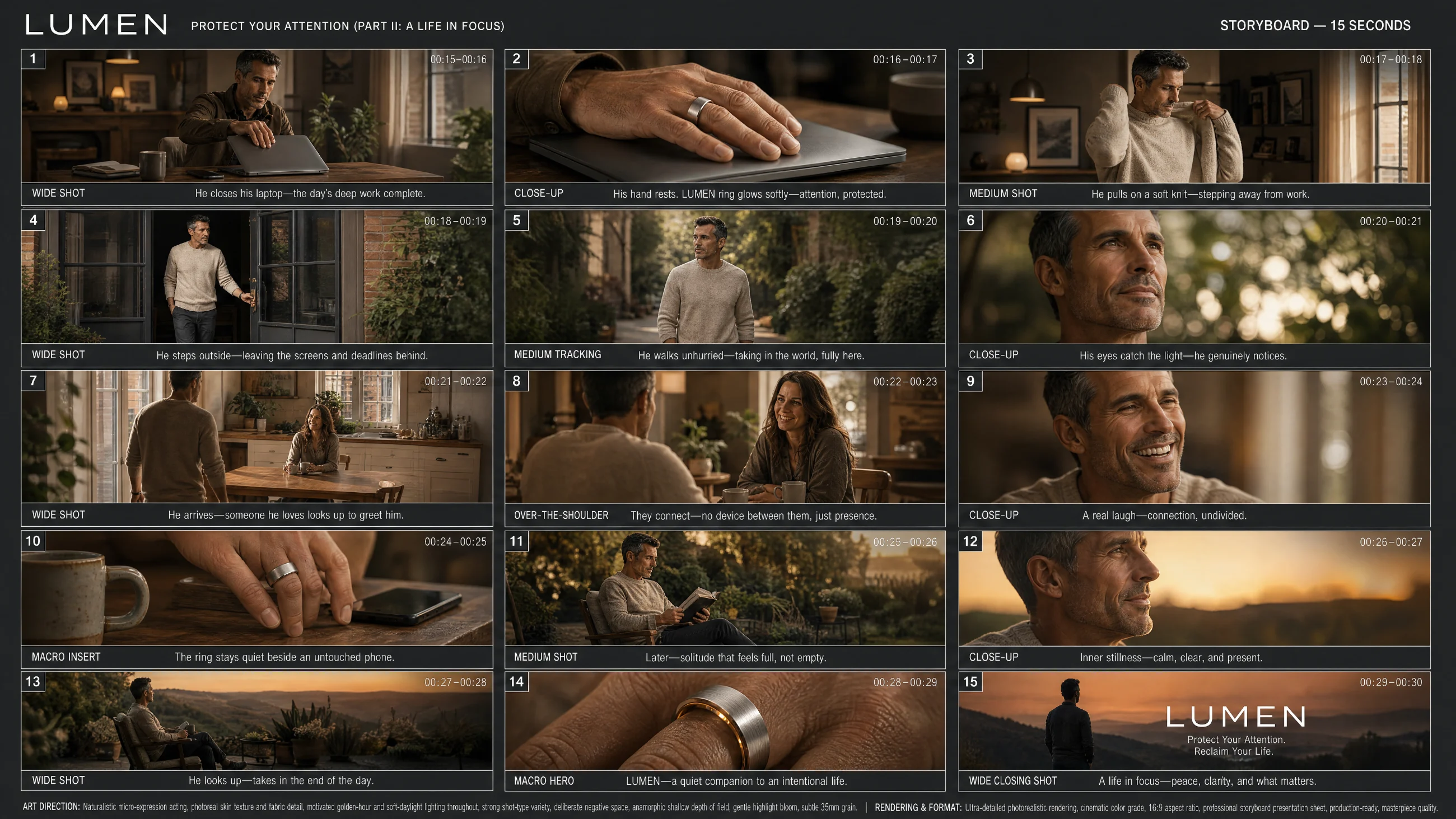
15 shots · Protect your attentionConcept & boards · ChatGPT + Midjourney
A life in focus: peace, clarity, and what matters.
— 06
The outcome
A finished film, and a faster way to work.
The piece holds up as a brand film: one clear story, a consistent cast and product, and a calm, premium tone from open to close. More useful than the film itself is the proof of method. A concept like this can now go from idea to a watchable cut in days, which changes when you can test an idea and how cheaply you can be wrong.
For a client, that means seeing the vision before the money is spent. Pitch with a real film instead of a deck, pressure-test the story, then take the winning version into a full shoot with the kinks already worked out. AI did the heavy lifting. Direction, taste, and a clear point of view did the rest.
Days, not weeksConcept to finished cut
4 toolsOne directed pipeline, end to end
1:32Cinematic runtime, 4K finish