
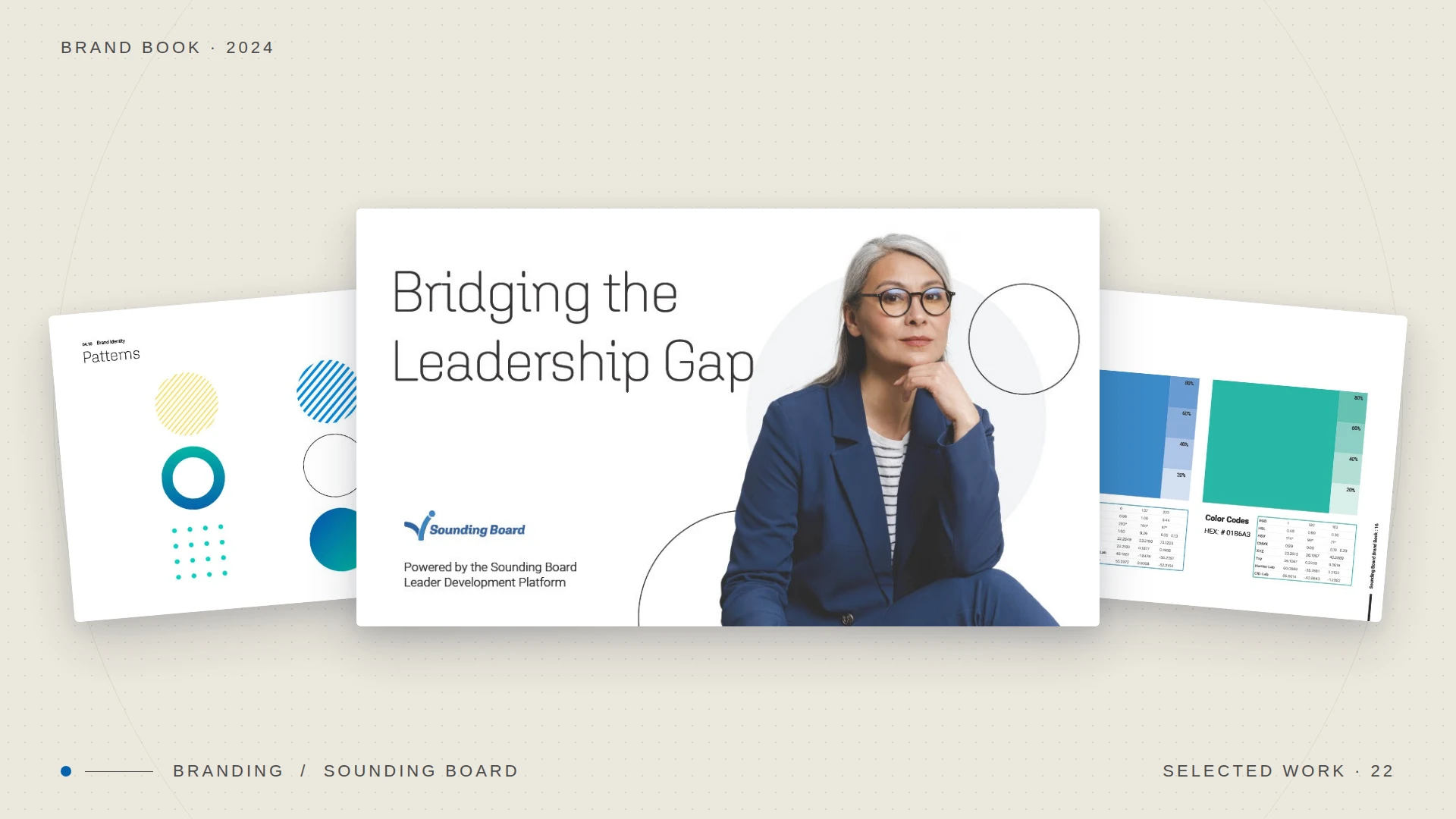
Revitalizing Sounding Board's brand to bridge the leadership gap.
— Brand identity / 2024
A confident, premium identity system that repositioned a leadership-development platform for top-tier global enterprises, including Intel, EY, and Cloudera. Brand voice, visual language, and design system, recalibrated end-to-end.
— What
Scope & deliverables
What was made.
— Contents
Inside the paper
From the Great Resignation to a fix.
The paper opens on the threat (40% of U.S. workers looking to leave) then walks people leaders from cause to cure across five sections, each carried by a single recurring photographic idea.
01Why talent mobility is critical to success
02How organizations benefit from mobility
03Common obstacles to talent mobility
04The rise of the digital talent marketplace
05The place for leadership coaching
— The pages
Eleven-page layout
Paced like an argument.
Cover to close, the layout walks people leaders from problem to cure. A blue-and-white system, generous type, a recurring photographic motif (stairs, gears, blocks), and bold lead statistics keep a citation-heavy paper readable end to end.
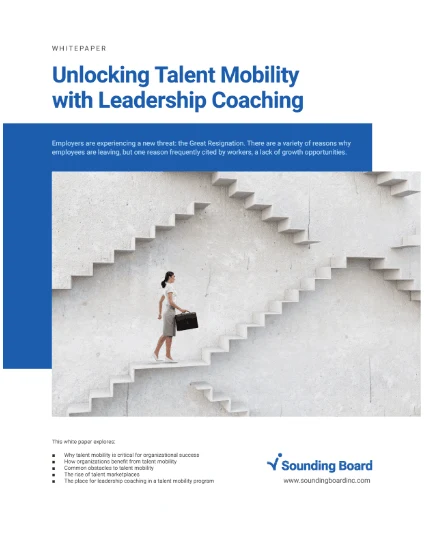
01Cover
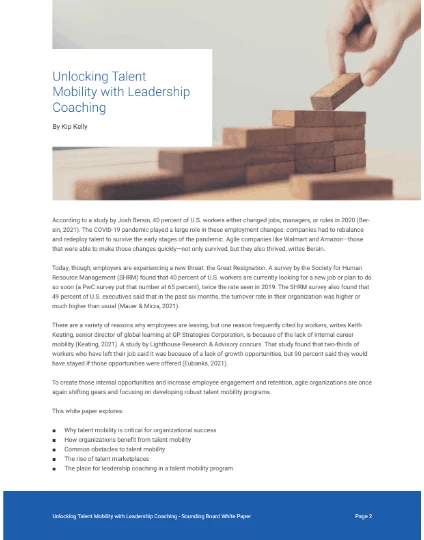
02Intro
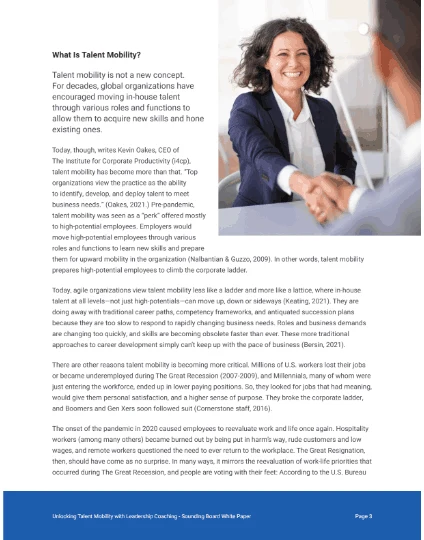
03Definition
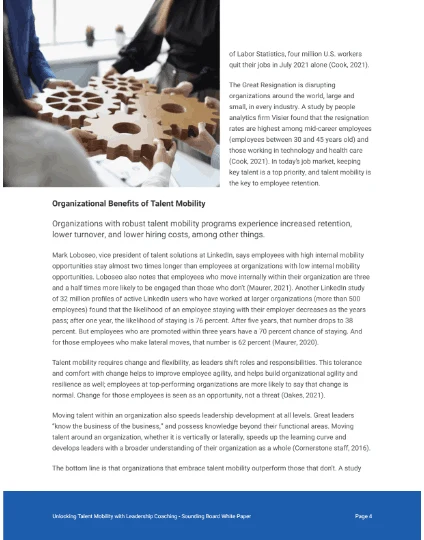
04Benefits
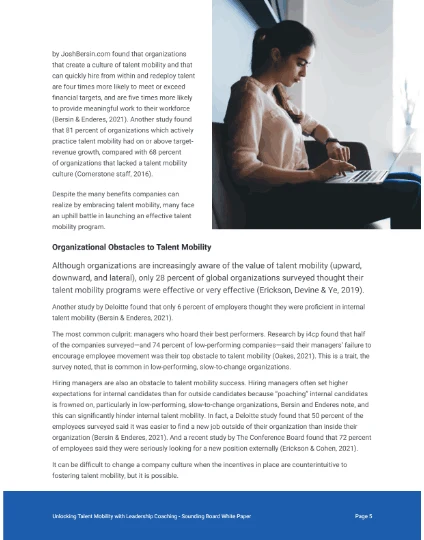
05Obstacles
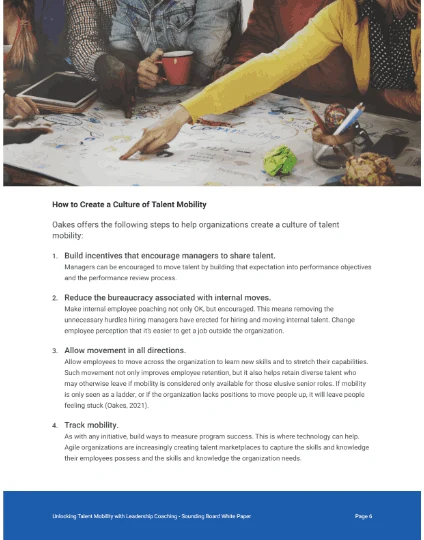
06Culture
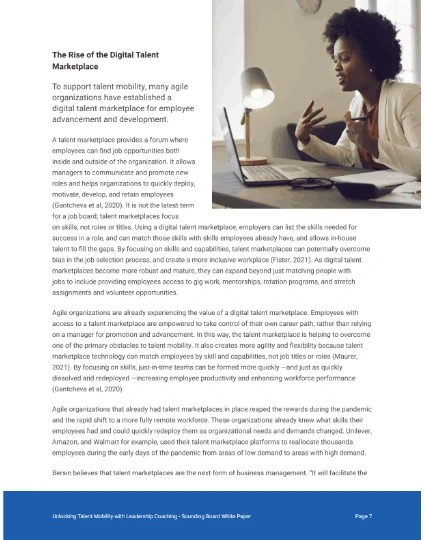
07Marketplace
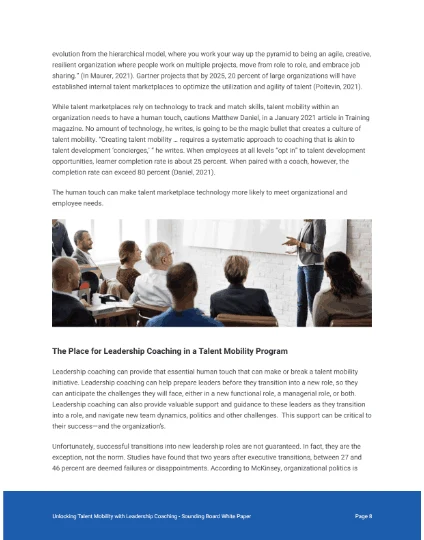
08Coaching
09Conclusion
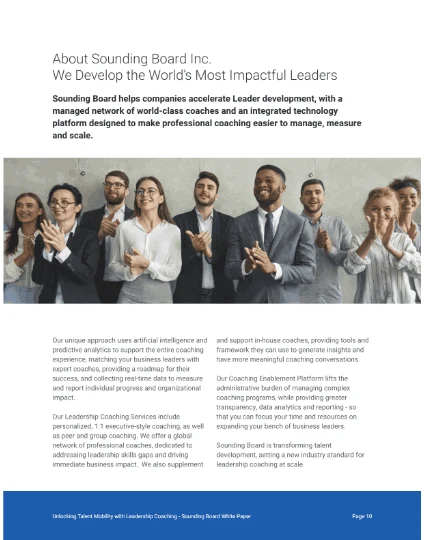
10About

Cover motifLattice, not ladder

GrowthBuild skills

CoachingThe human touch
— The data
Why it lands
The numbers behind the argument.
Every claim is anchored in third-party research (SHRM, LinkedIn, Deloitte, Josh Bersin) and laid out to be read at a glance.
40%
of U.S. workers are looking to leave, roughly twice the rate seen in 2019 (SHRM, 2021).
90%
of those who quit say they'd have stayed if offered growth opportunities (Lighthouse, 2021).
4×
more likely to hit financial targets in a strong talent-mobility culture (Bersin, 2021).
80%
program completion when learners are paired with a coach, up from 25% (Daniel, 2021).
2×longer tenure where internal mobility is high.LinkedIn, 2021
3.5×more likely to be engaged when employees move internally.LinkedIn, 2021
28%of organizations rate their mobility programs effective.Conference Board, 2019
Agile organizations view talent mobility less like a ladder and more like a lattice, where talent at all levels can move up, down, or sideways.
— Why
Strategic context
Why it mattered.
— Framework
A culture of mobility
Four moves to unstick talent.
The paper's most practical spread distills i4cp's research into four steps a leadership team can act on, designed as a clean, numbered sequence.
01
Build incentives
Make sharing talent an explicit performance objective for managers, not a favor they grant reluctantly.
02
Reduce bureaucracy
Strip out the hurdles to internal moves. Make internal "poaching" encouraged, not frowned upon.
03
Allow movement in all directions
Up, down and sideways, so people don't feel stuck waiting for a rare senior opening to appear.
04
Track mobility
Measure program success. This is where talent-marketplace technology, and coaching data, earns its keep.
— Impact
What changed
What changed.
“
— The throughline
When mobility is only seen as a ladder, people feel stuck. Build a lattice, coach people through every move, and they stay.
Unlocking Talent Mobility with Leadership Coaching · Kip Kelly · Sounding Board, 2022