
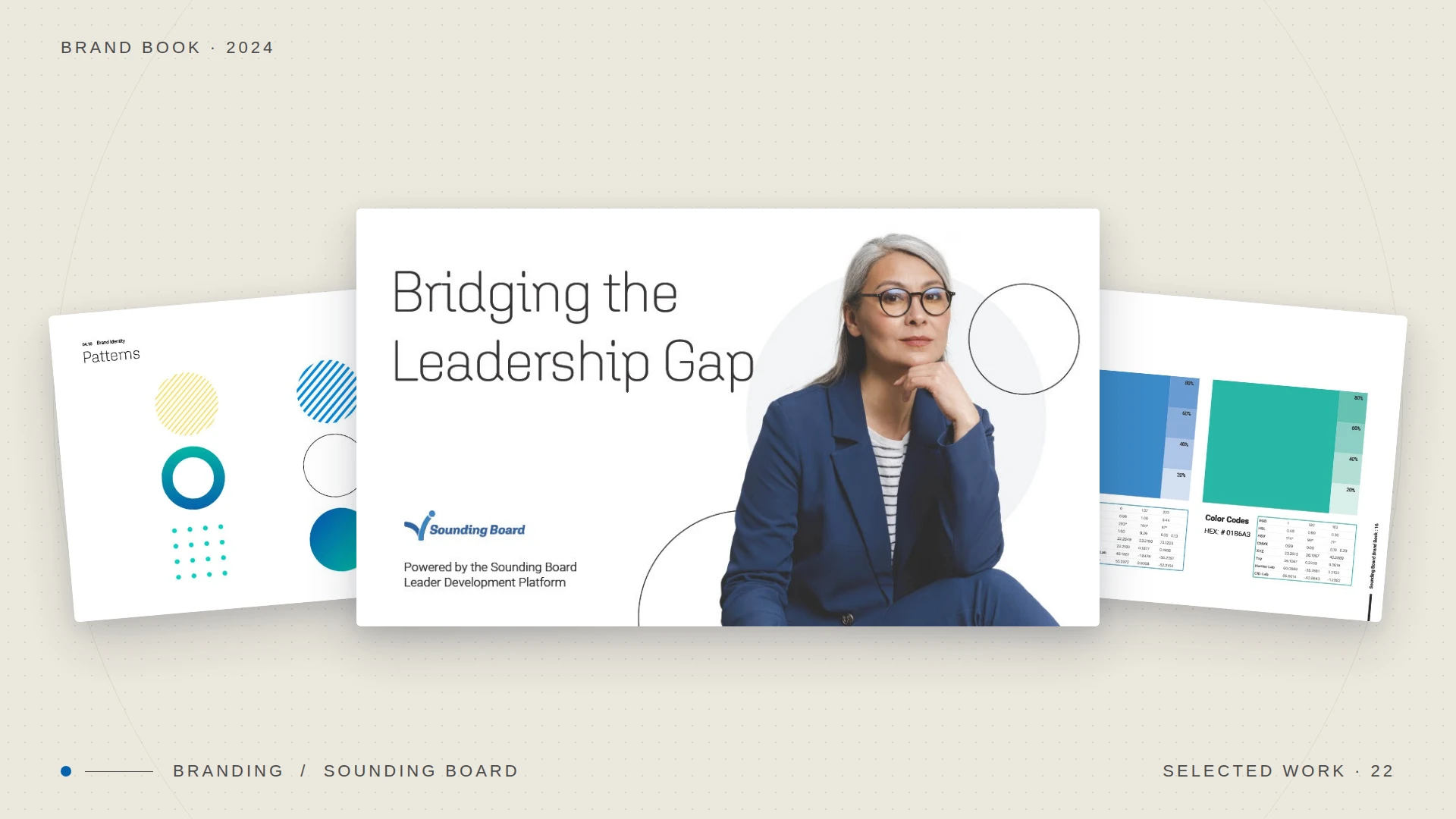
Revitalizing Sounding Board's brand to bridge the leadership gap.
— Brand identity / 2024
A confident, premium identity system that repositioned a leadership-development platform for top-tier global enterprises, including Intel, EY, and Cloudera. Brand voice, visual language, and design system, recalibrated end-to-end.
— 01 / The artifact
All eleven pages
Inside the guide.
The full eleven-page sequence, art-directed in a single navy-and-teal system, with leader-forward photography, a recurring circle motif, and typography tuned for a quick, confident read. Click any page to view it full size.
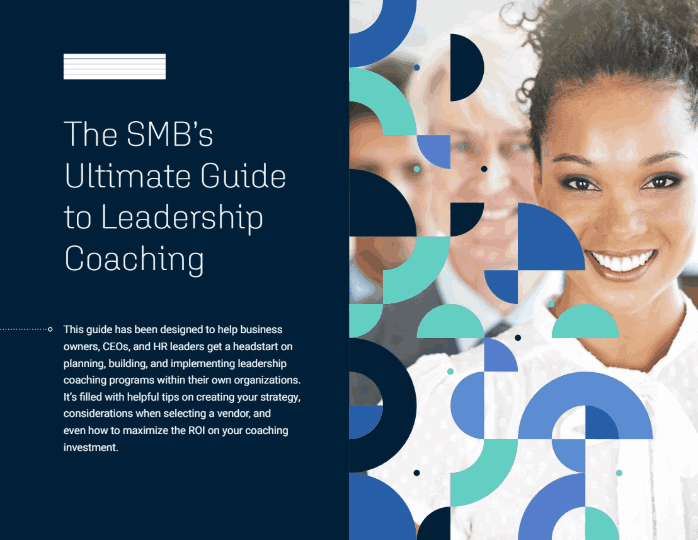 01 · Cover
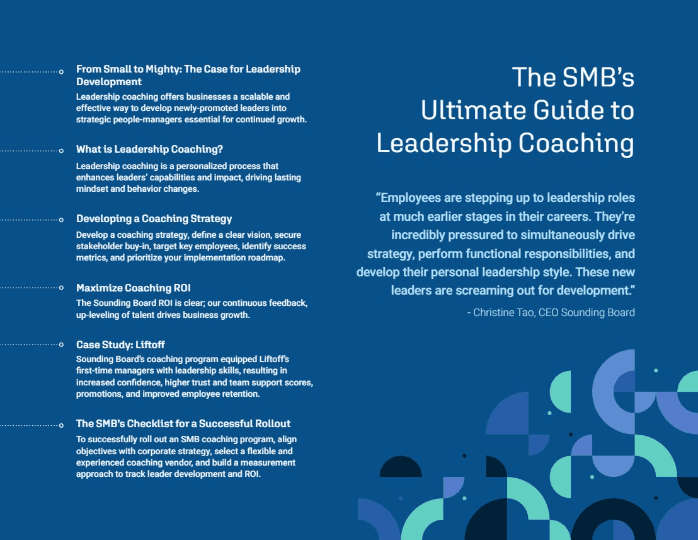 02 · Contents
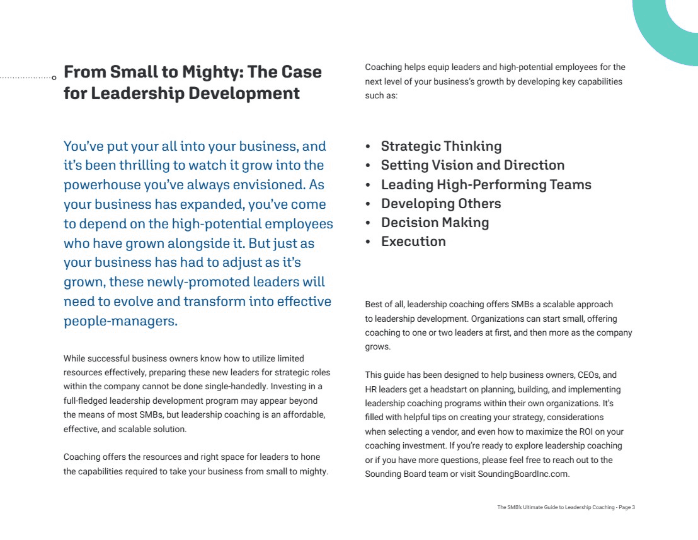 03 · The case
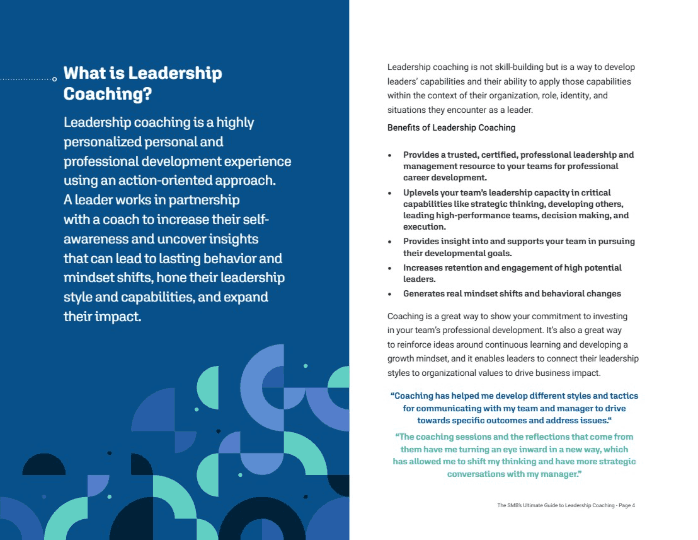 04 · Definition
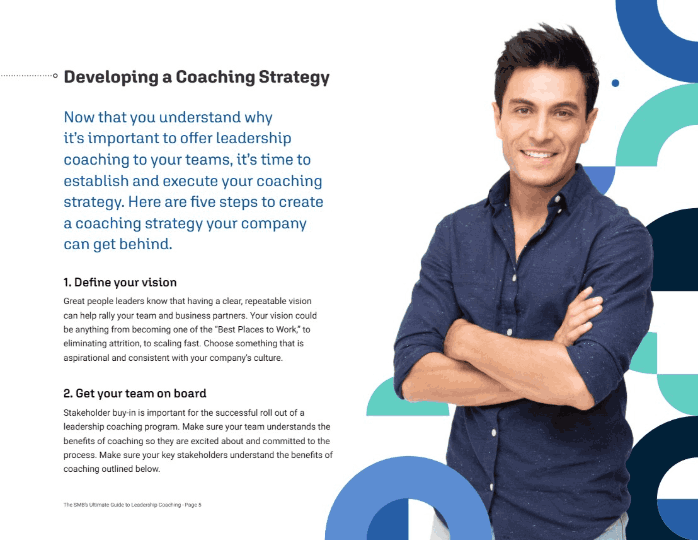 05 · Strategy
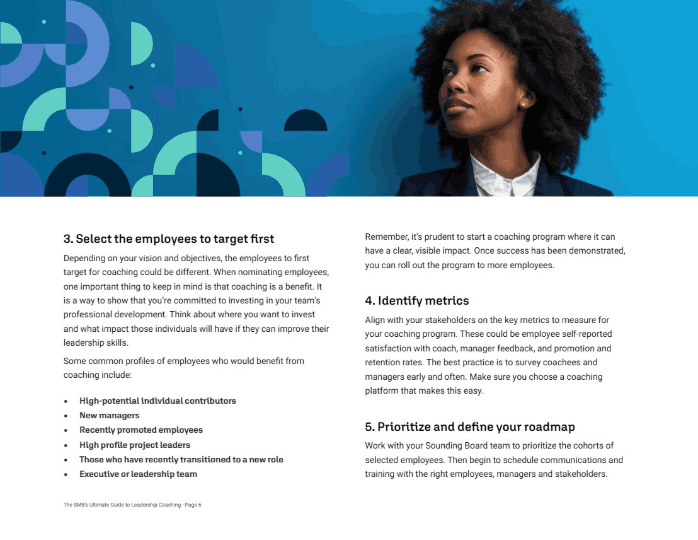 06 · Strategy II
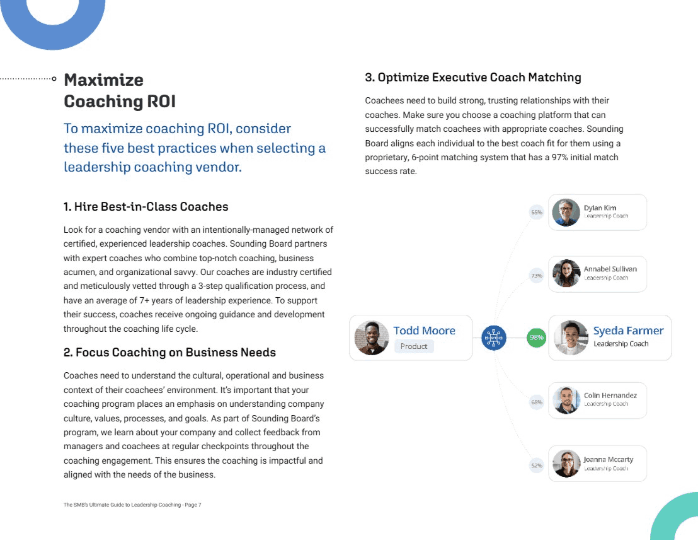 07 · ROI
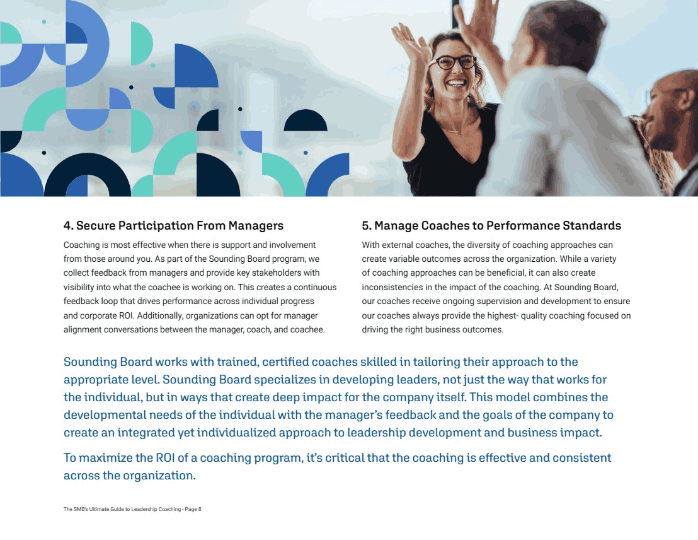 08 · ROI II
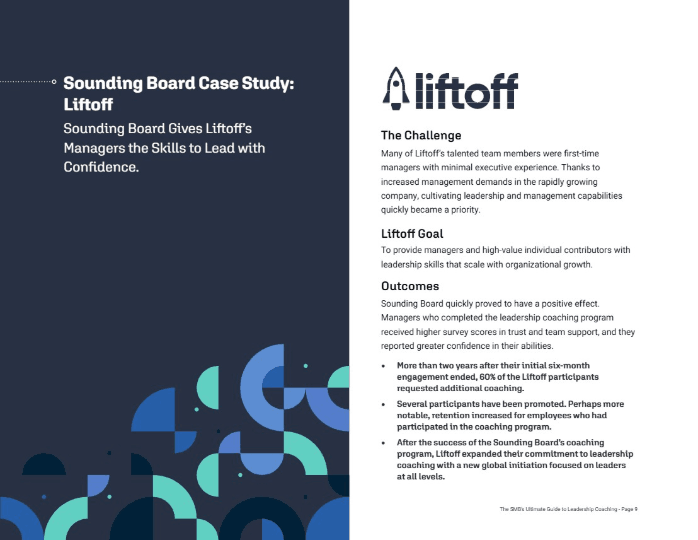 09 · Liftoff
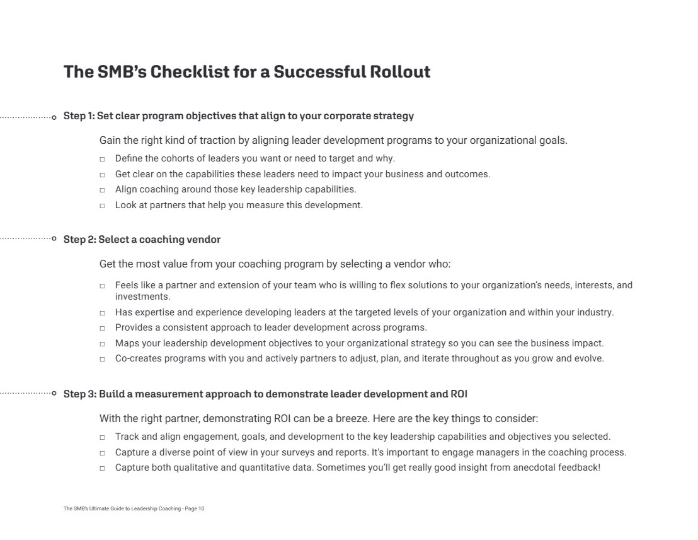 10 · Checklist
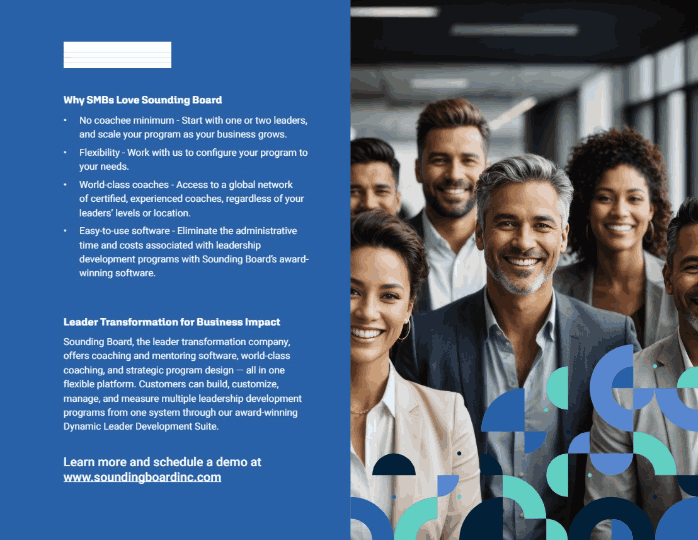 11 · Close
Eleven pages — one cohesive editorial system, cover to closeFull guide
— 02 / The brief
Why it exists
A guide a busy owner would actually finish.
SMB owners, CEOs, and HR leaders are time-poor and pitch-weary. The piece had to feel genuinely useful from the first page (not gated, not over-promotional) while quietly moving a skeptical reader toward a coaching conversation.
So I shaped it as an eleven-page strategic guide that walks a leader through how to plan, build, and implement a leadership-coaching program inside their own company, with an embedded Liftoff customer story carrying the proof.
Employees are stepping up to leadership roles much earlier in their careers. These new leaders are screaming out for development.

Opening register — calm, premium, leader-forward photographyGuide p. 7
— 03 / The argument
From small to mighty
The case for developing the leaders you already have.
As a business grows, it leans on the high-potential people who grew with it, but those newly-promoted leaders still have to evolve into effective people-managers. A full-blown development program looks out of reach for most SMBs; coaching is the affordable, scalable answer.
The guide frames coaching as the room and resources leaders need to build the capabilities that take a business from small to mighty, starting with one or two leaders, then scaling as the company grows.
Strategic thinking
Setting vision & direction
Leading high-performing teams
Developing others
Decision making
Execution
Six capabilities — the spine of the "case for development"Guide p. 3

What leadership coaching actually is, and isn't.
- A highly personalized, action-oriented development partnership between leader and coach.
- Not skill-building, but building the capacity to apply capabilities in real situations.
- Drives lasting mindset and behavior shifts, not one-off training takeaways.
- Signals real investment in a team, lifting retention and engagement of high-potentials.
Cover photography — leaders, front and centerGuide p. 1
— 04 / Structure
How it's built
One read, planned end to end.
I sequenced the guide as a build: make the case, define the terms, then hand the reader a concrete plan and the proof it works. Each section earns the next, so a leader can skim for the part they need or read the whole thing in a sitting.
— 00From Small to Mighty: The Case for Leadership Developmentp. 03
— 01What is Leadership Coaching?Definition & benefitsp. 04
— 02Developing a Coaching StrategyFive steps to a program your company can get behindp. 05
— 03Maximize Coaching ROIFive best practices for selecting a vendorp. 07
— 04Case Study: LiftoffFirst-time managers, leading with confidencep. 09
— 05The SMB's Checklist for a Successful Rolloutp. 10
— 06Why SMBs Love Sounding Boardp. 11
The strategy, in five steps
The heart of the guide is a repeatable framework any owner can run, turning "we should invest in our leaders" into a program with a vision, the right people, and metrics behind it.
— 01Define your visionA clear, repeatable vision ("best place to work," zero attrition, scale fast) aligned to company culture.
— 02Get your team on boardSecure stakeholder buy-in so leaders understand the benefits and commit to the process.
— 03Select who to target firstNew managers, recently-promoted and high-potential ICs, project leaders, role-changers, the exec team.
— 04Identify your metricsSatisfaction, manager feedback, promotion and retention rates, surveyed early and often.
— 05Prioritize & define the roadmapStart where impact is visible, prove it, then roll the program out to more of the org.
— 05 / The proof of rigor
Maximize coaching ROI
How to pick a vendor that actually moves the needle.
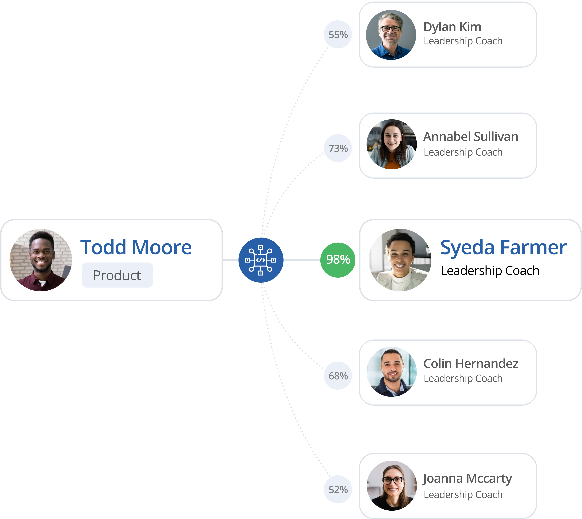
To make the ROI argument concrete, the guide lays out five best practices for choosing a coaching partner, anchored by the thing buyers underestimate most: the quality and fit of the match between leader and coach.
Five best practices for selecting a coaching vendor.
- Hire the best coaches: an intentionally-managed, certified network.
- Focus coaching on business needs: anchored in your culture and goals.
- Optimize coach matching: fit drives the trust everything else rests on.
- Secure manager participation: a continuous feedback loop, not a solo effort.
- Manage coaches to standards: supervision that keeps quality consistent.
Coach-matching visual — the brand's proprietary fit engineGuide p. 8
97%
Initial coach-match success rate.
6-pt
Proprietary leader-to-coach matching system.
7+
Avg. years of leadership experience per coach.
3-step
Vetting & qualification process for every coach.
— 06 / The proof
Case study: Liftoff
A real program turns the thesis into a buying case.
The embedded customer story does the convincing. Many of Liftoff's talented people were first-time managers with little executive experience, and a fast-growing company needed them to lead, quickly. A six-month coaching engagement gave them the skills to lead with confidence.

Outcomes photography — confidence, trust, momentumGuide p. 9
60%
Of participants requested more coaching, 2+ years after the engagement ended.
6mo
Initial engagement that set the whole program in motion.
↑
Higher trust & team-support scores; retention rose for participants.
Global
Liftoff expanded coaching to leaders at all levels.
— 07 / Impact
What it did
From cold inquiry to informed buyer.
Sales reached for it as a first-touch artifact; marketing ran it as a download hook. Because it led with usefulness instead of a pitch, it earned the read, turning SMB leaders into informed buyers before the first call, and closing on a clear reason to choose Sounding Board.

Why SMBs love Sounding Board: no minimums, flexible, top-tier coachesGuide p. 11
”
— The takeaway
Lead with usefulness and the sale follows. The guide had to earn the read before it ever asked for the call.
Peter Loebbecke · Sr. Creative Director