
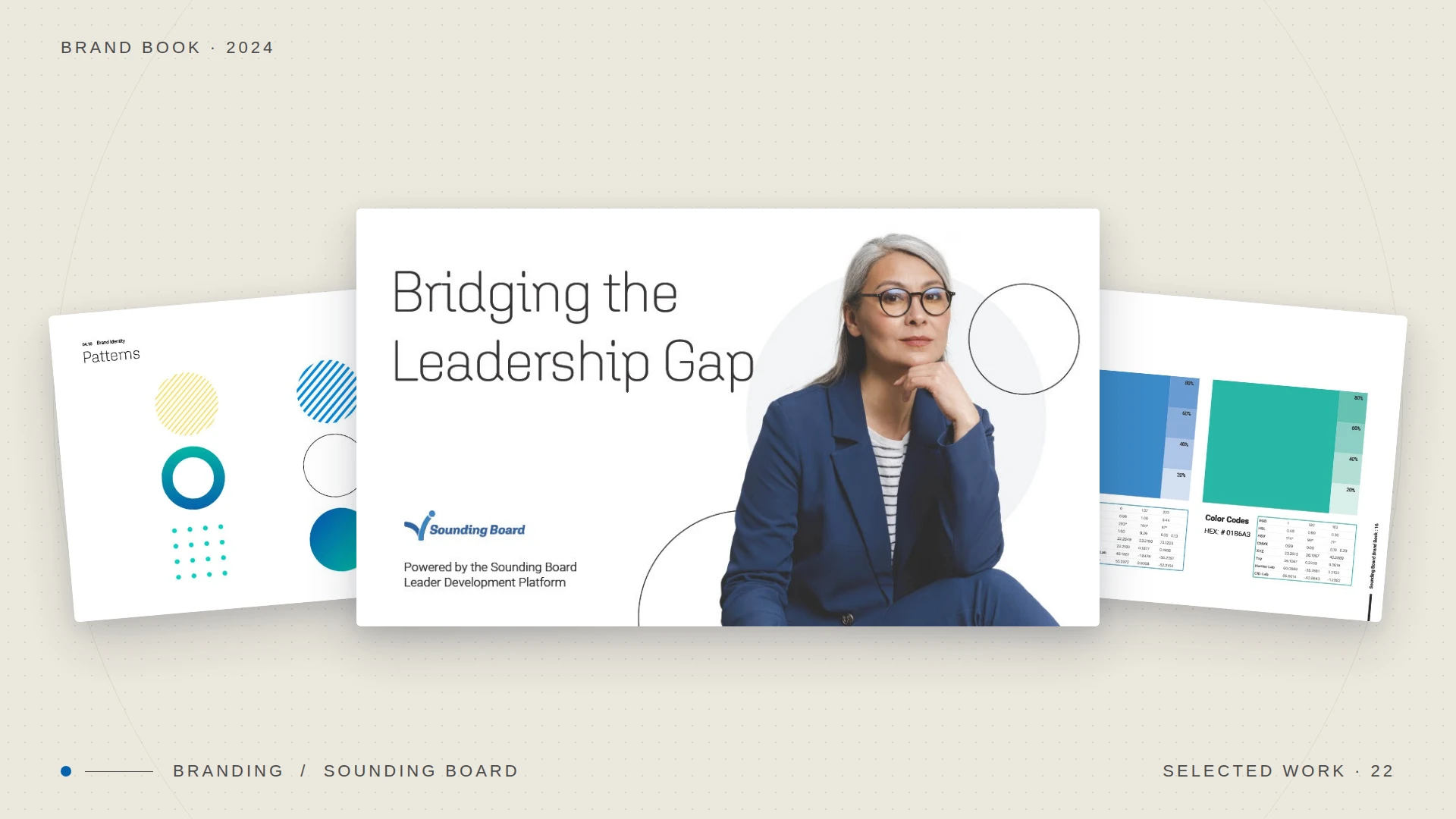
Revitalizing Sounding Board's brand to bridge the leadership gap.
— Brand identity / 2024
A confident, premium identity system that repositioned a leadership-development platform for top-tier global enterprises, including Intel, EY, and Cloudera. Brand voice, visual language, and design system, recalibrated end-to-end.
— 01 / The brief
Why it exists
The hardest transition in a career.
The day a strong individual contributor becomes a people leader, the title changes but the skills haven't caught up yet. That distance, between what a new manager can do and what their role now demands, is the leadership gap. Most coaching marketing skips this moment for senior leaders; most companies wait until a new manager is already struggling to invest.
Sounding Board wanted to own that overlooked moment. The brief: a definitive, evidence-backed eBook, co-published with Executive Networks, that names the gap, makes the case for early investment, and proves coaching closes it. Thirty-nine pages, eight chapters, two embedded customer stories.
I remember literally having moments of panic because, aside from Google, I had no guidance on how to navigate my new role.
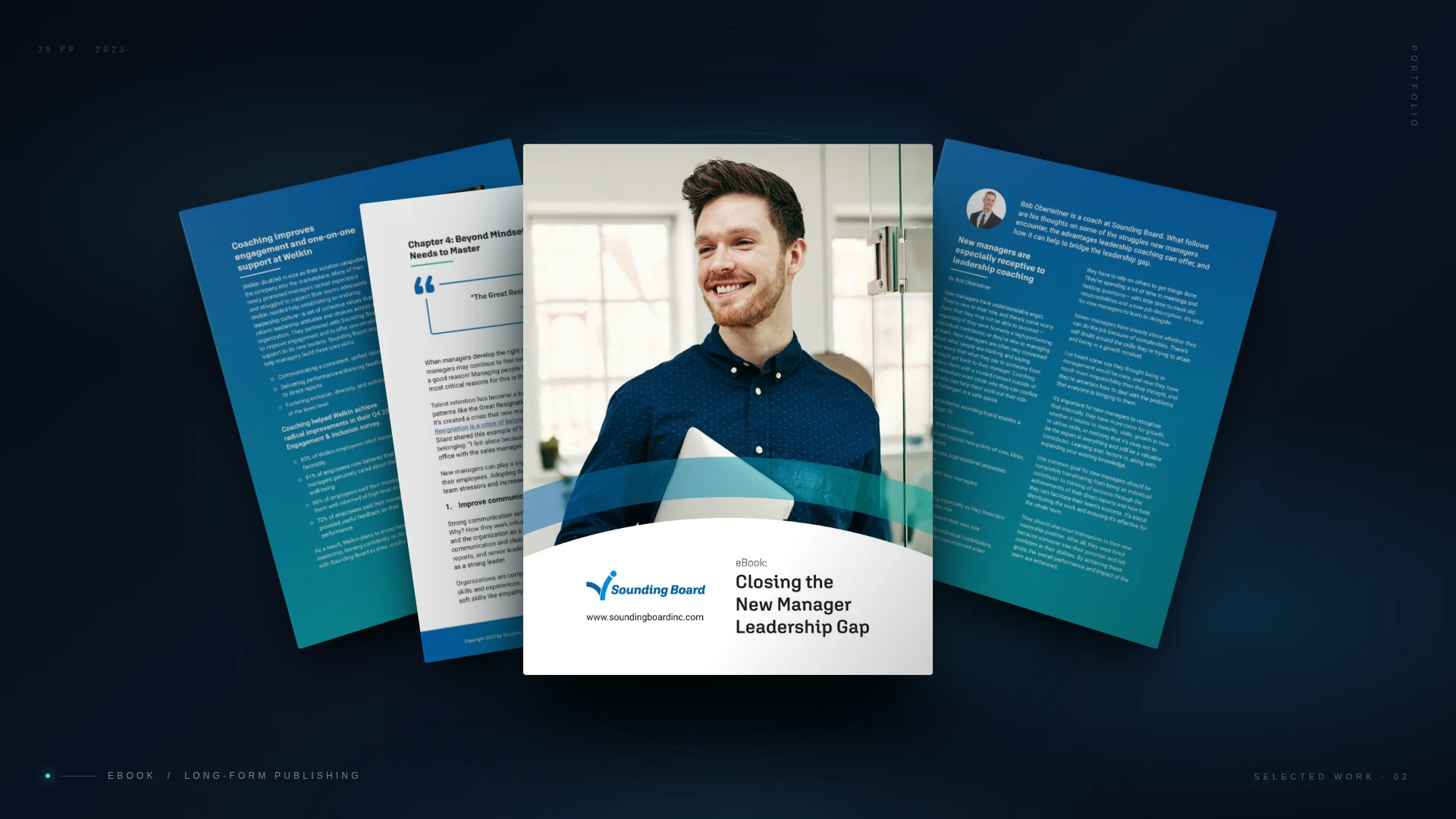
A premium, leader-forward artifact, not a brochure.
- Sounding Board's teal-to-indigo gradient and sweeping arc, carried cover to close.
- Authentic workplace photography of real first-time managers, not abstract stock.
- Typography tuned for a skimmable, 39-page read that still feels editorial.
The flagship — cover system and interior registereBook · 2023
— 02 / The artifact
How it's built
Eight chapters, one throughline.
I sequenced the guide as a build, opening with the CEO's own first-manager story, then walking a talent leader from the problem through the capabilities, mindset shifts, and rollout that close the gap. Coach essays and "Pro Tips" from Sounding Board's network break up the long read and keep the voice human.
— 00A CEO's Story: From New Manager to Company LeaderChristine Tao, in her own wordsp. 01
— 01Support New Managers Who Are Feeling SqueezedThe gap, and what poor management costsp. 03
— 02Top Capabilities for First-Time ManagersThe soft skills the digital age demandsp. 07
— 033 Mindset Shifts New Managers Need to MakeIC to leader · tasks to strategy · self to teamp. 11
— 04Beyond Mindset: 2 Things to MasterCommunication & a supportive structurep. 16
— 05From Inexperienced Manager to Effective LeaderThe Welkin case studyp. 21
— 06How HR Can Turn Managers into Strategic LeadersThe support system around the managerp. 24
— 07Critical Conversations Executives Must HaveSetting expectations earlyp. 29
— 08Why Coaching Should Replace Traditional TrainingThe Liftoff case studyp. 32
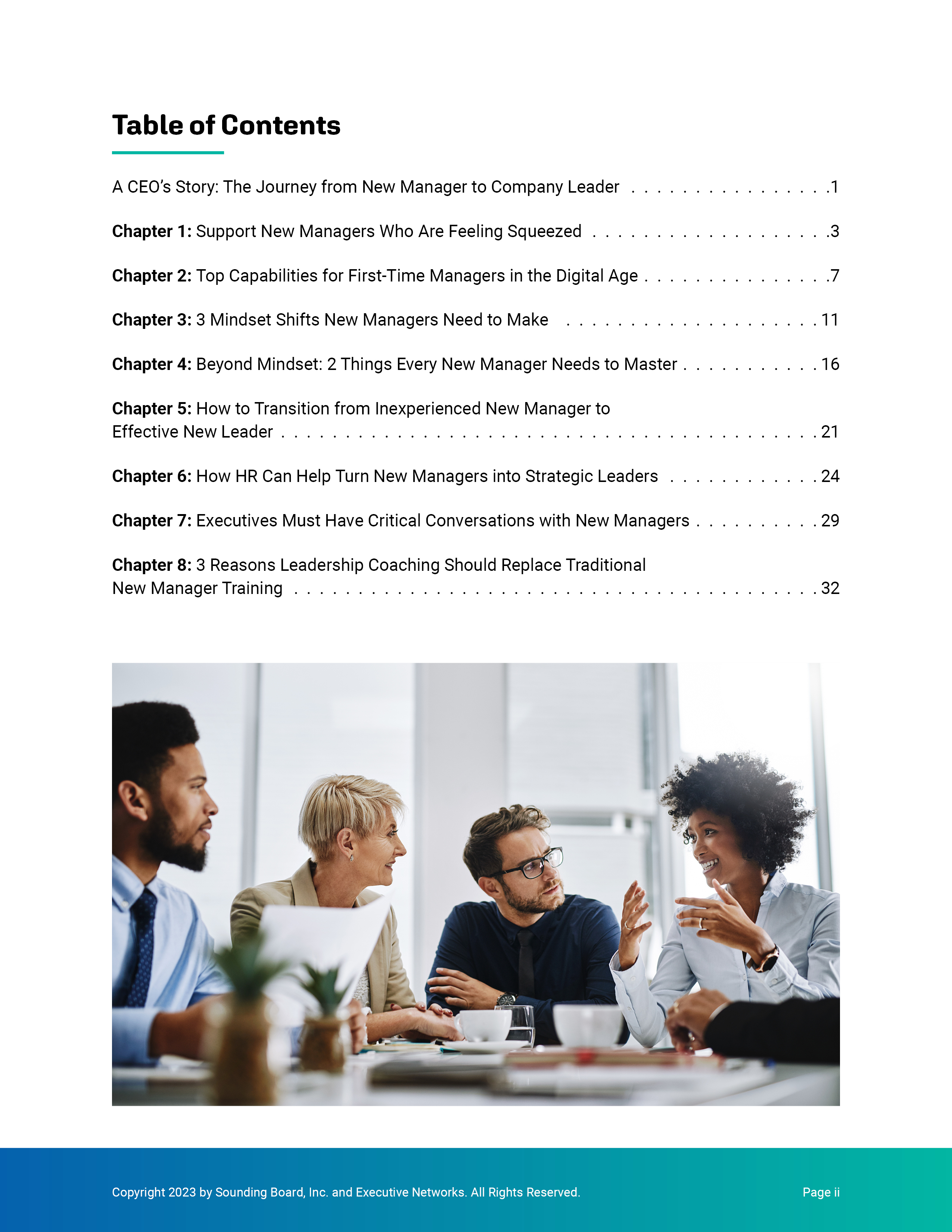
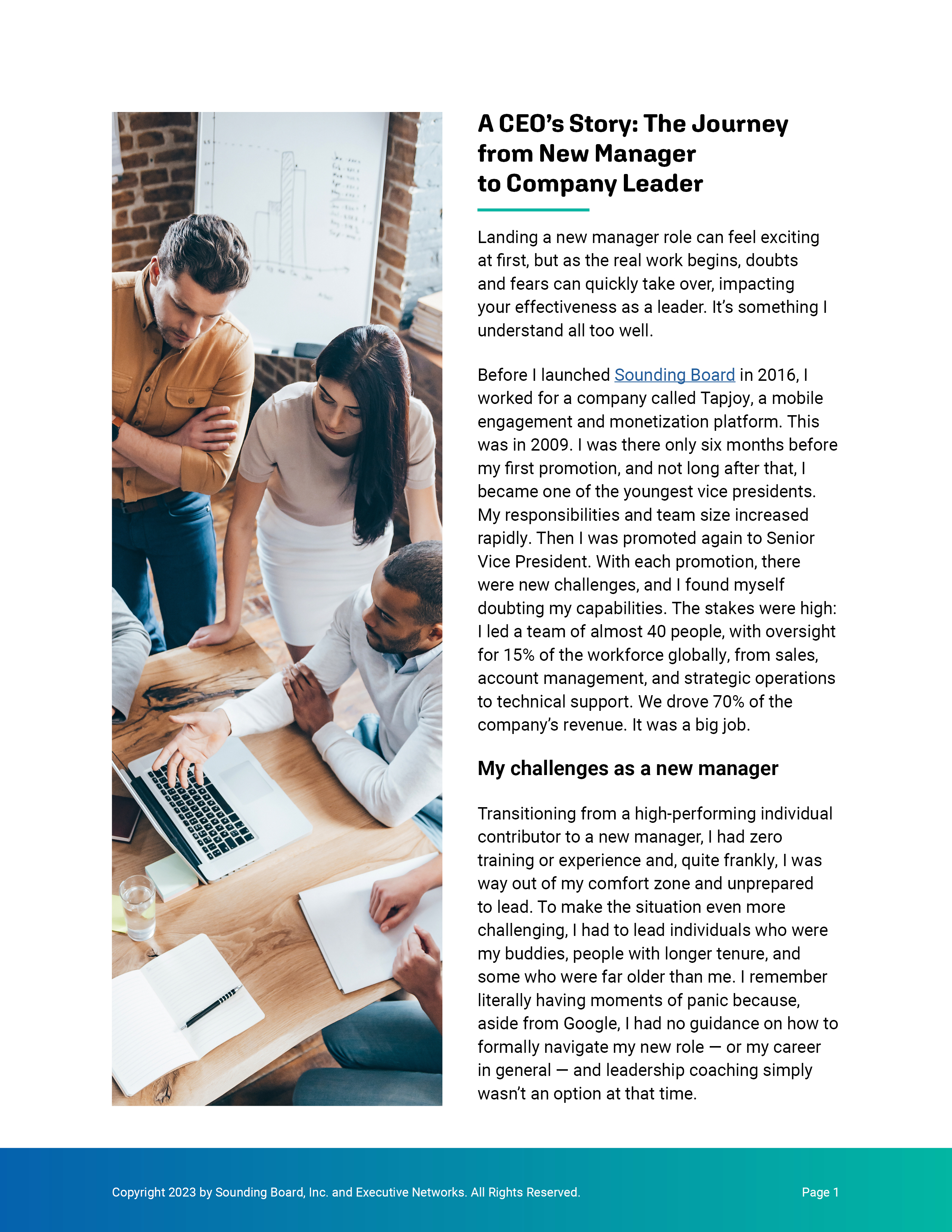
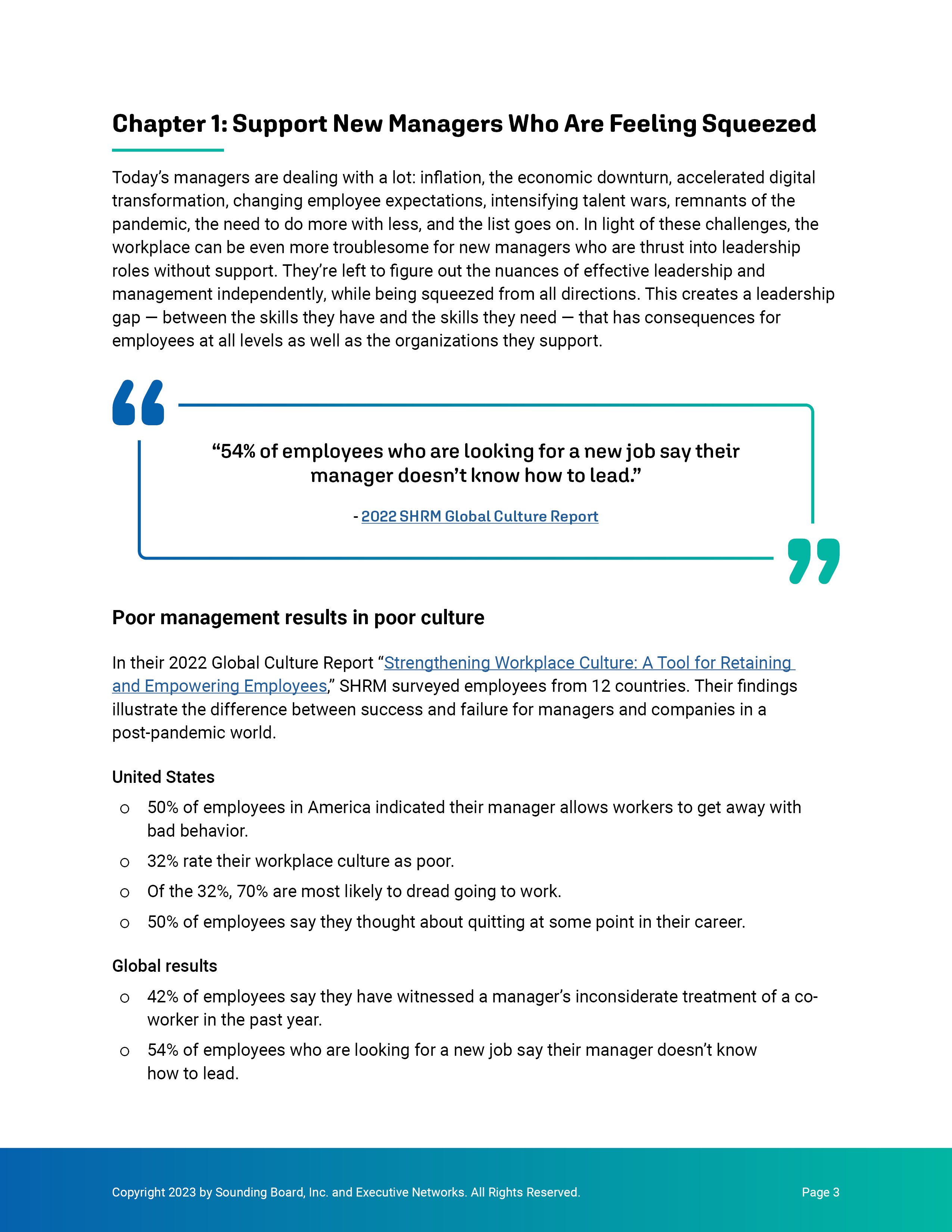
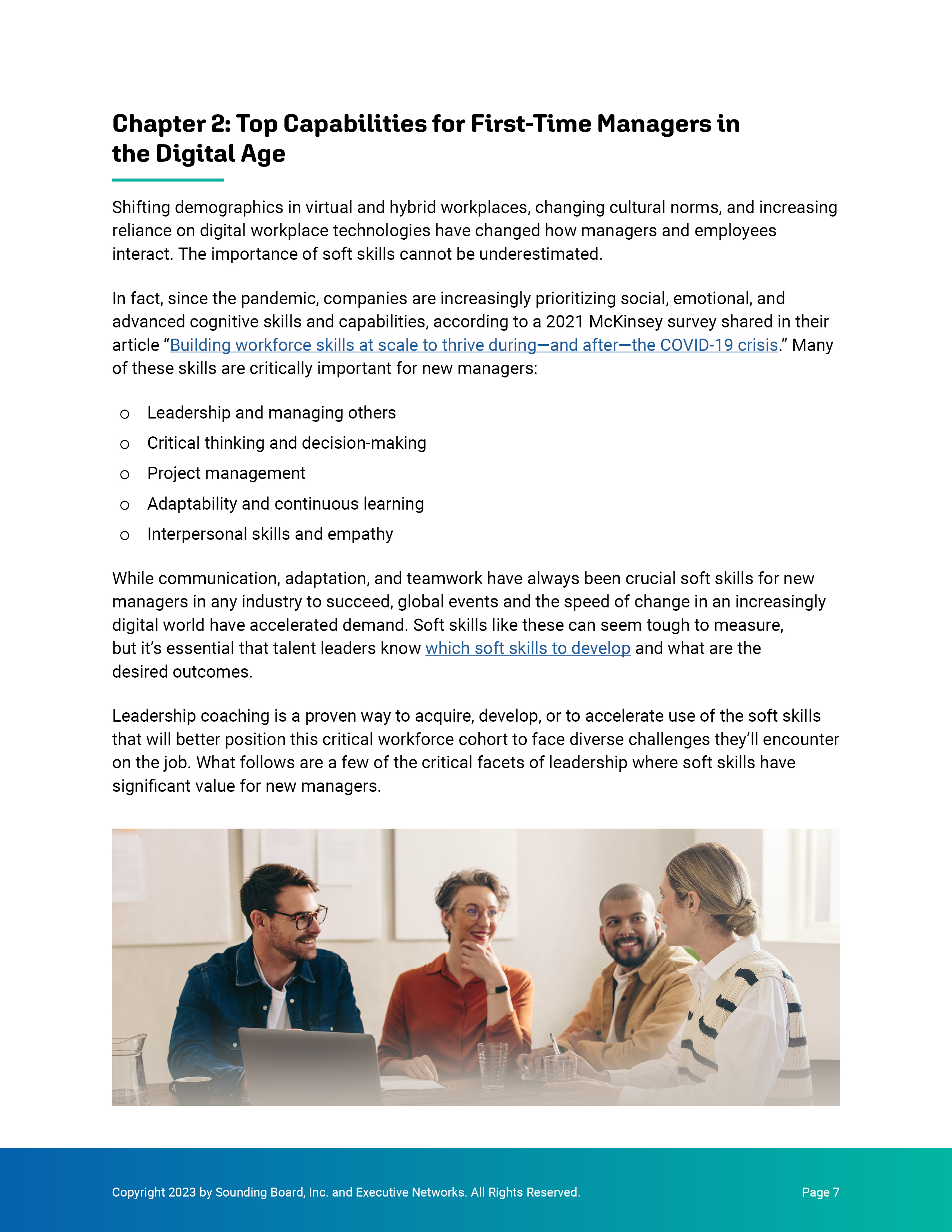
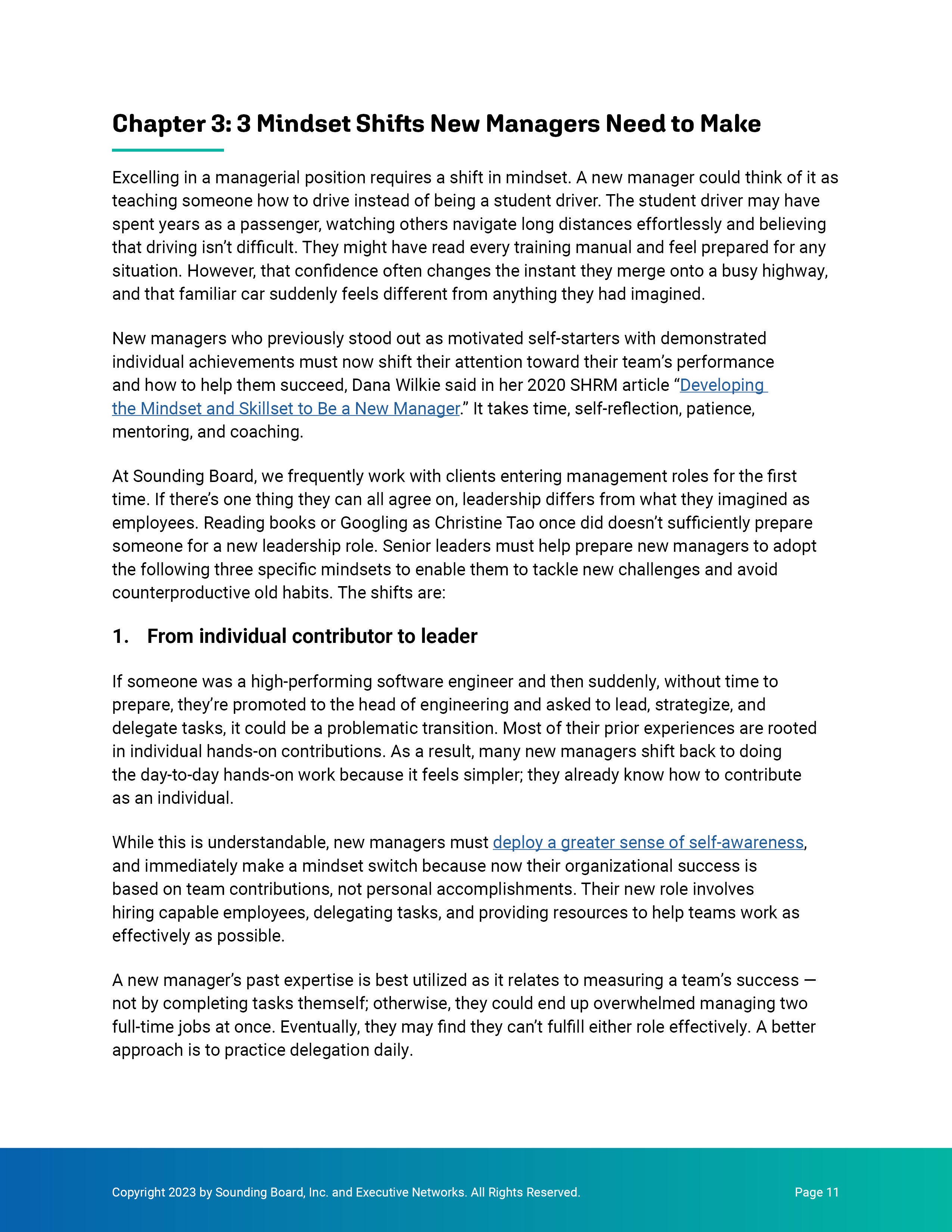
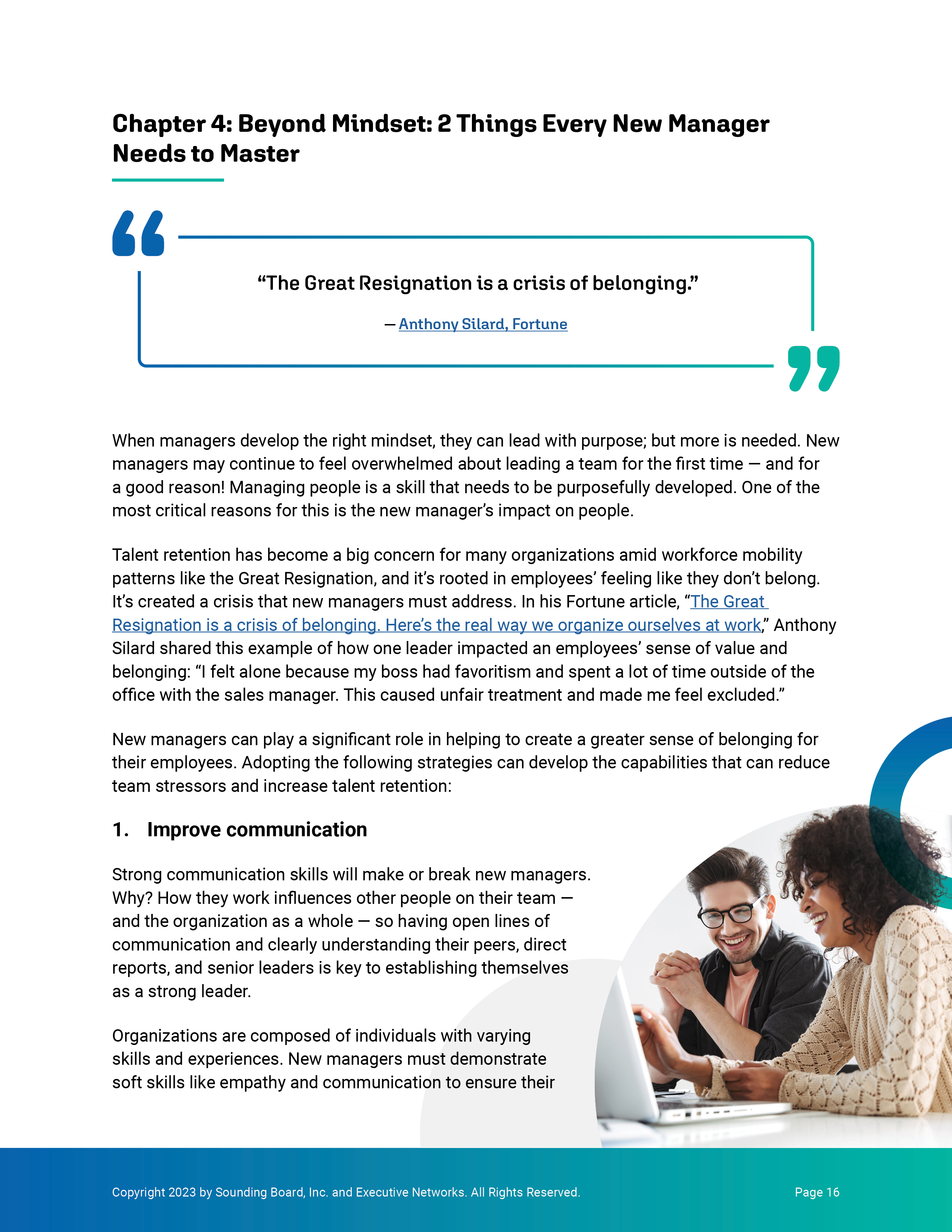
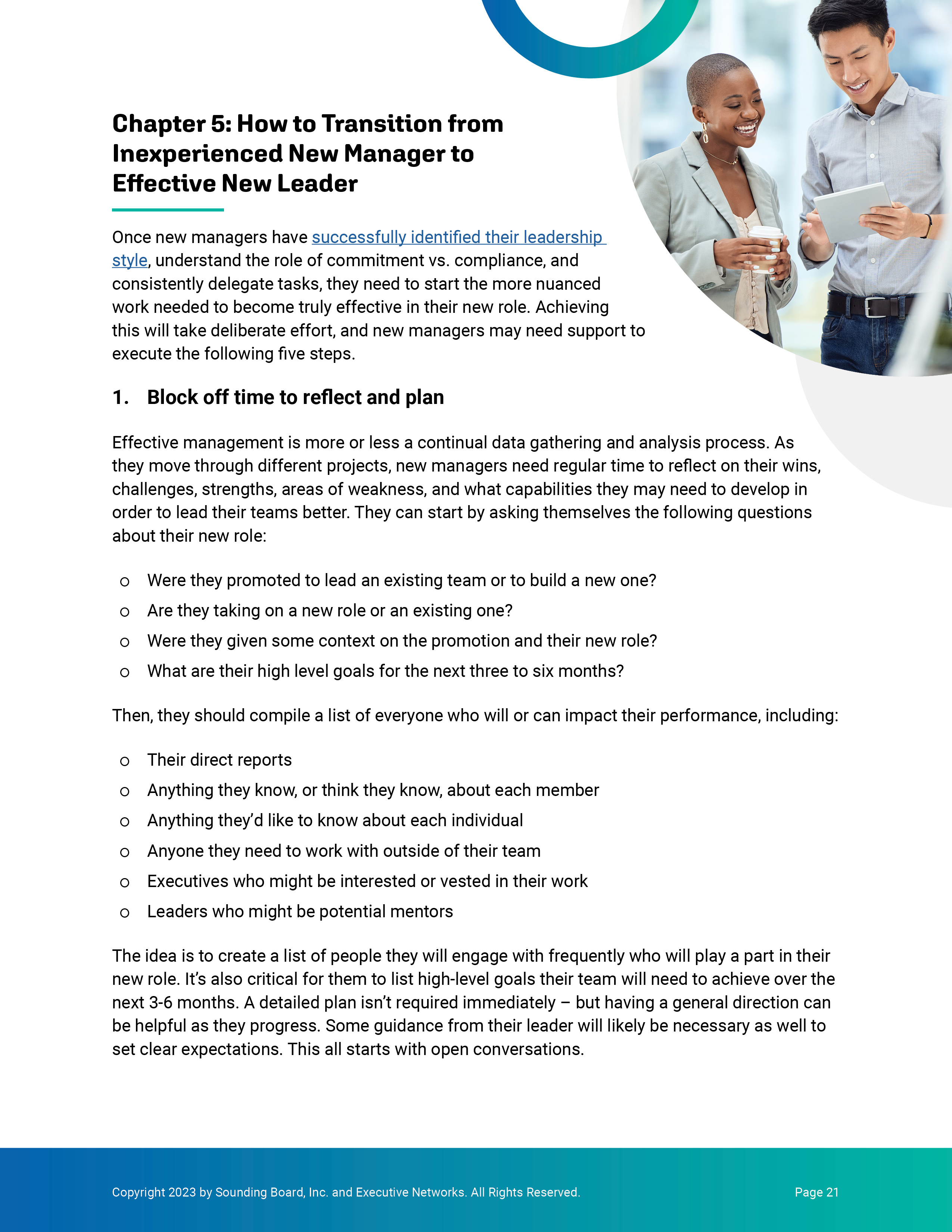
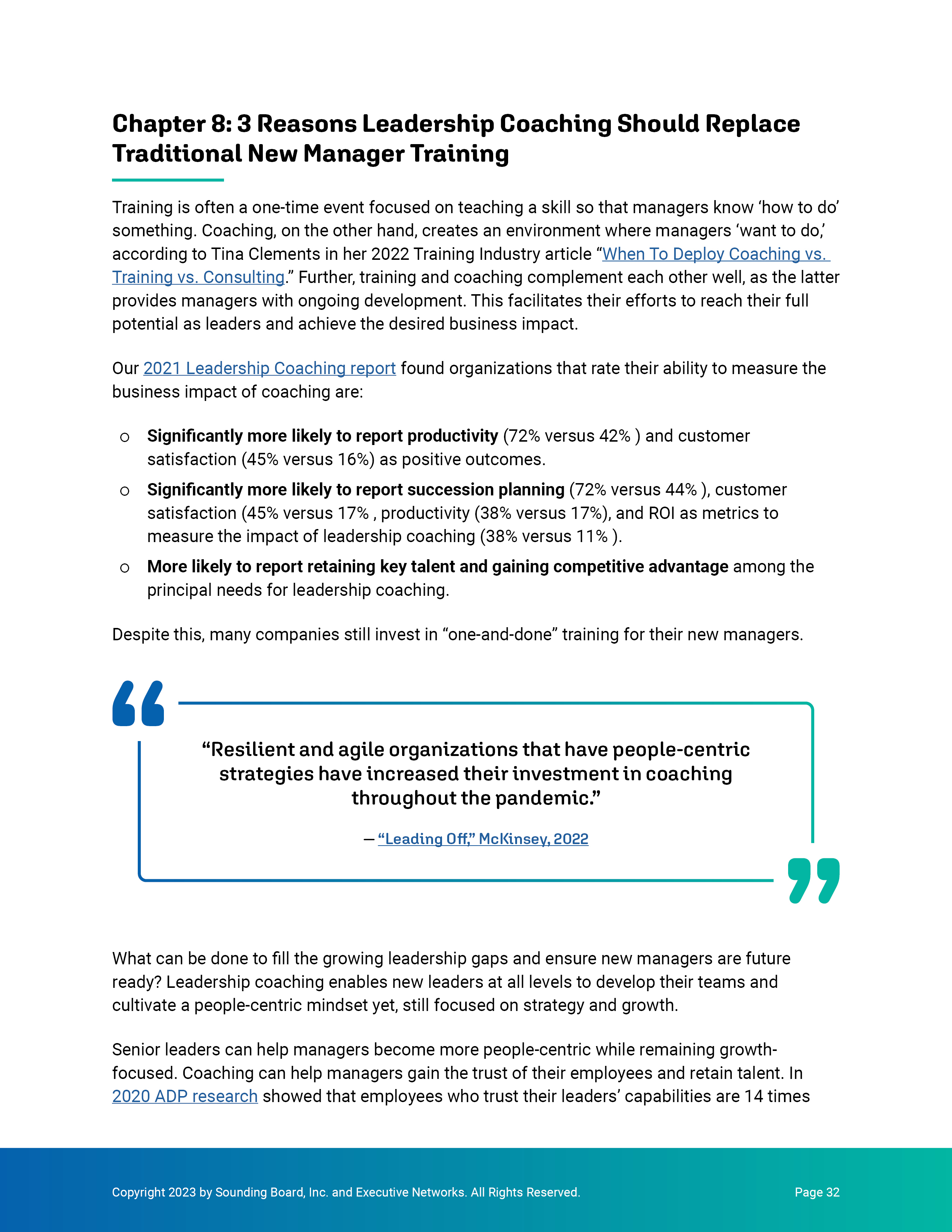
Contents & chapter openers — a consistent editorial system, cover to closeClick any page to enlarge
— 03 / The thesis
Three mindset shifts
It's a shift in mindset, not just a new title.
The intellectual spine of the guide is a simple, repeatable idea: becoming a manager means making three deliberate shifts. The eBook frames each with a plain analogy (the student driver merging onto the highway for the first time) so a busy talent leader can carry it into a room and explain it cold.
— 01From individual contributor to leaderSuccess is now measured by the team's contributions, not personal output, so the instinct to do the work yourself has to give way to hiring, delegating, and resourcing.
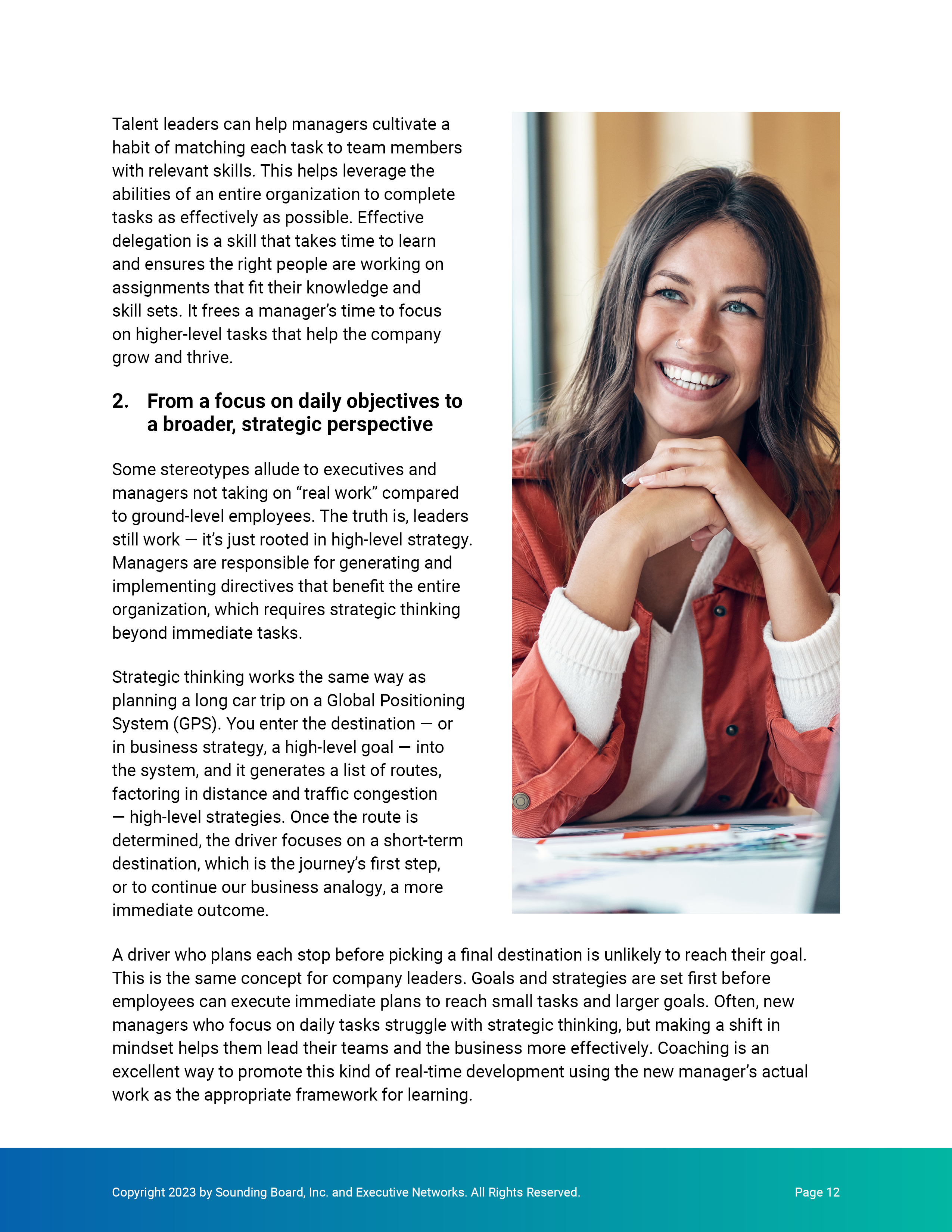
— 02From daily tasks to strategySet the destination first. Like a GPS routing a long trip, leaders define the high-level goal, then let the immediate steps follow, rather than planning each stop in isolation.
— 03From self-focus to team-focusManagers are the public face of the org, but companies succeed as teams. Every communication, even casual ones, has to be re-centered on the team instead of the self.
What the guide says coaching actually builds.
- Delegation as a multi-step skill, not an afterthought once the to-do list overflows.
- Communication that builds trust in a hybrid, trust-deficit environment.
- An authentic leadership style matched to the leader's own strengths and values.
- Commitment over compliance: loyalty earned, not enforced.
The framework — art-directed for skim and depthChapters 3 – 4
— 04 / The substance
Capabilities
The soft skills the digital age demands.
To keep the eBook useful rather than abstract, it names the specific capabilities first-time managers need, drawn from McKinsey, SHRM, Gartner, and HBR research the guide cites throughout. These became the recurring vocabulary the design reinforced across every chapter.
Leading & managing others
Critical thinking & decisions
Delegation
Active listening
Empathy
Adaptability & learning
Strategic perspective
Performance conversations
Inclusion & belonging
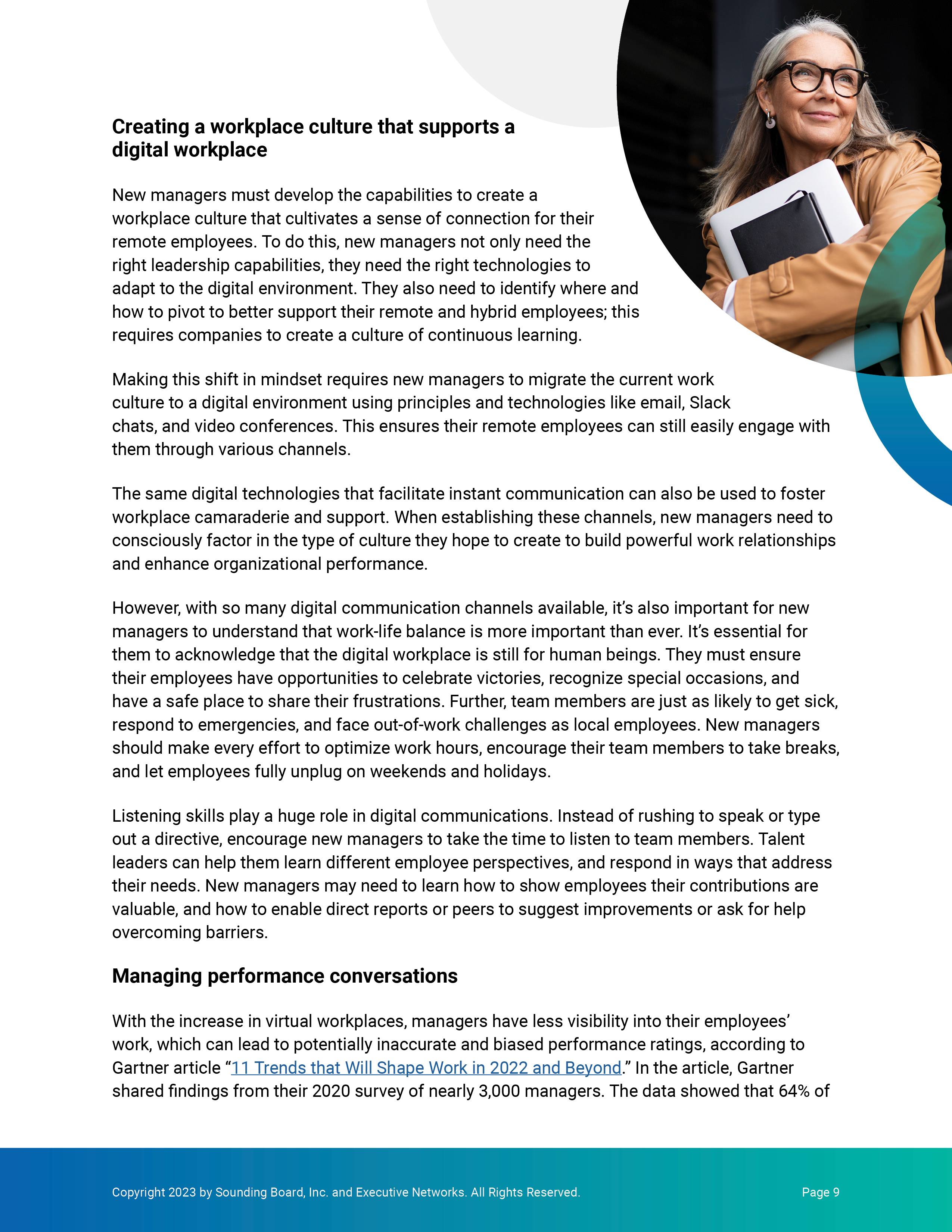
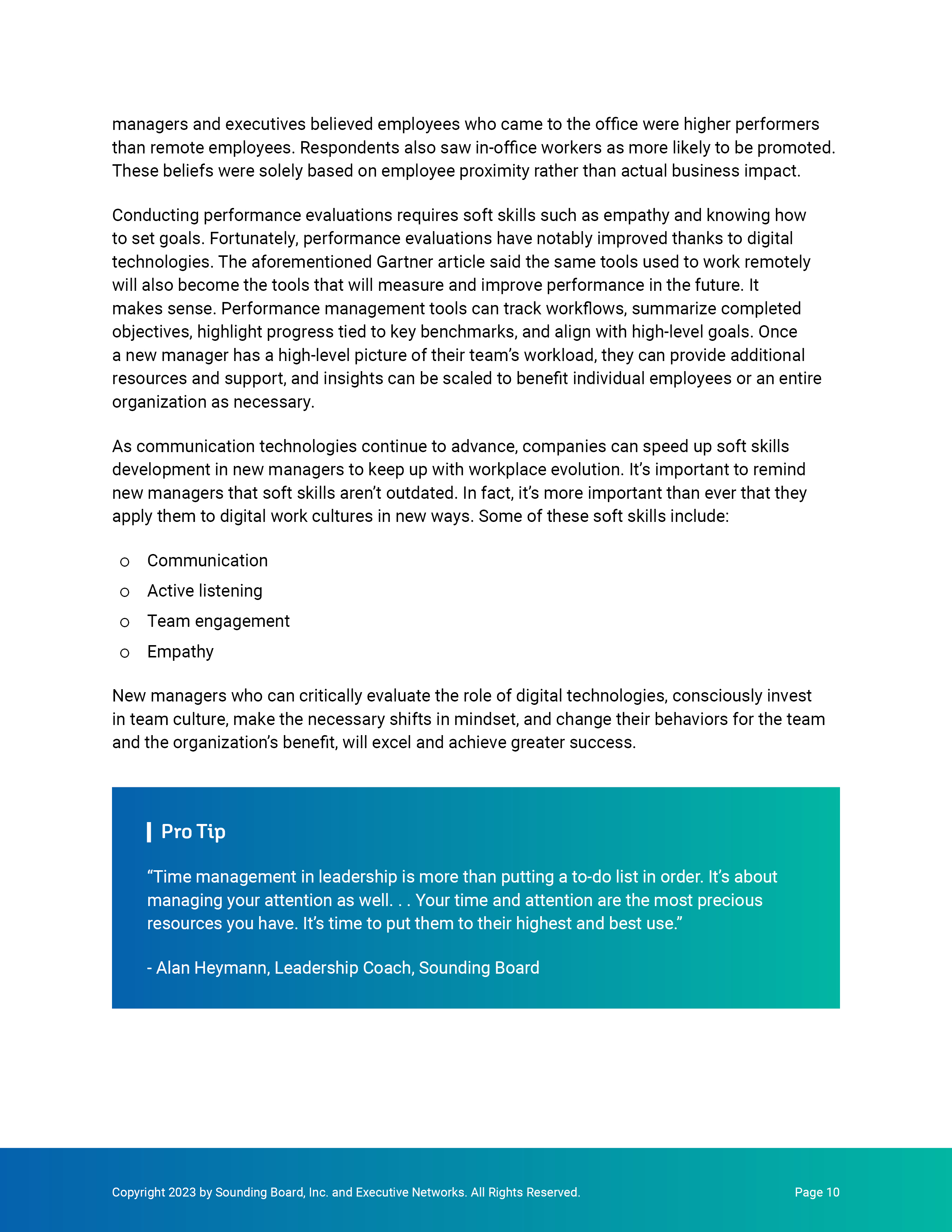
From doing to leading — interior pages, with coach "Pro Tips" breaking the long readChapter 2
— 05 / The proof
Two embedded case studies
Two real programs turn the thesis into a buying case.
Argument is one thing; proof closes. The guide embeds two customer stories. At Welkin, which doubled in size as its product took off, newly promoted managers lacked the experience to support their teams, so Sounding Board's coaching rebuilt the leadership culture around three core skills.
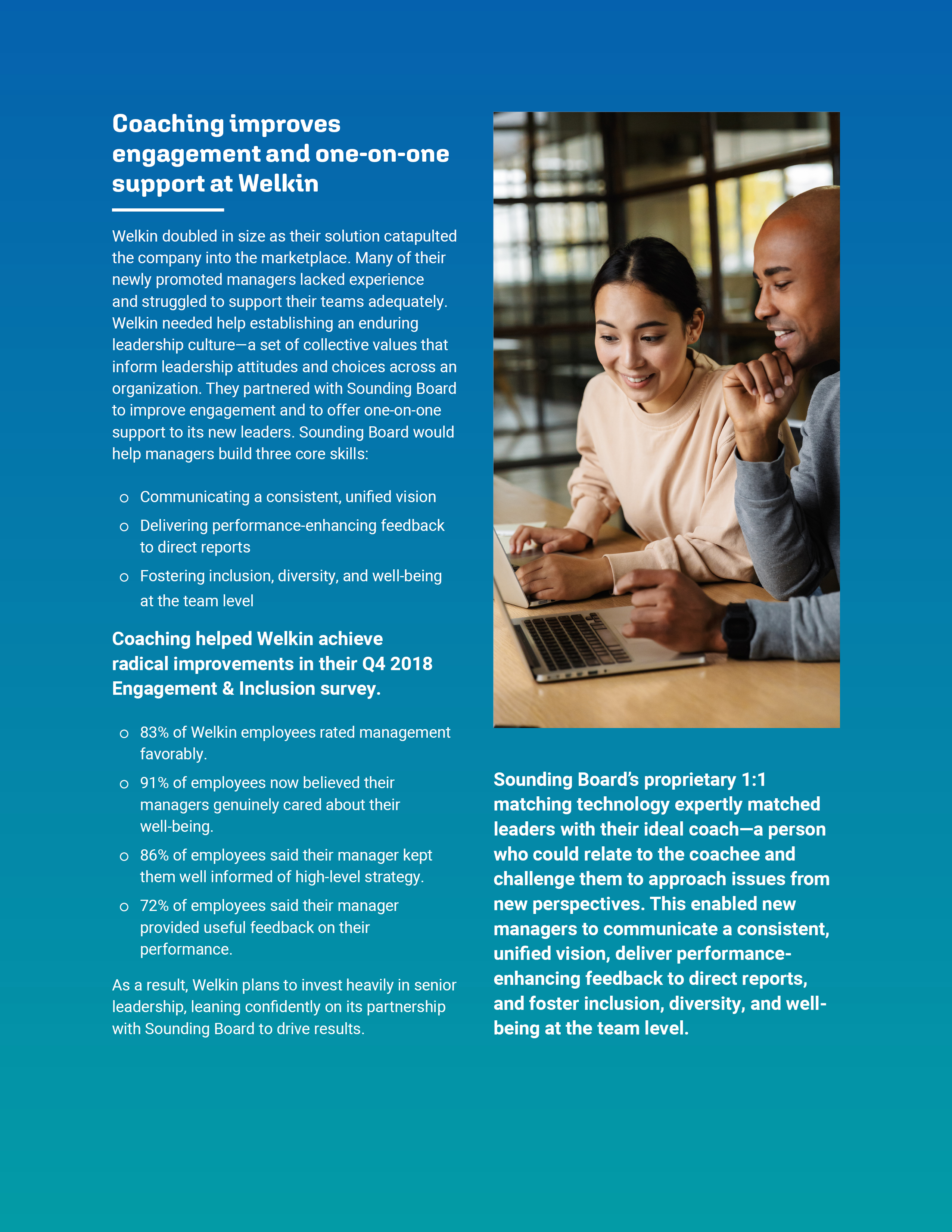
Welkin · Q4 2018 Engagement & Inclusion survey
- Proprietary 1:1 matching paired each leader with their ideal coach.
- Managers learned to communicate a consistent, unified vision.
- They began delivering performance-enhancing feedback to direct reports.
- And to foster inclusion, diversity, and well-being at the team level.
83%
Of Welkin employees rated management favorably.
91%
Believed their manager genuinely cared about their well-being.
86%
Said their manager kept them informed of high-level strategy.
72%
Said their manager gave useful feedback on performance.
The second story, Liftoff, anchors the closing argument for coaching over one-and-done training. New managers with minimal executive experience used a six-month, peer-based, coach-led engagement, and the results compounded long after it ended.
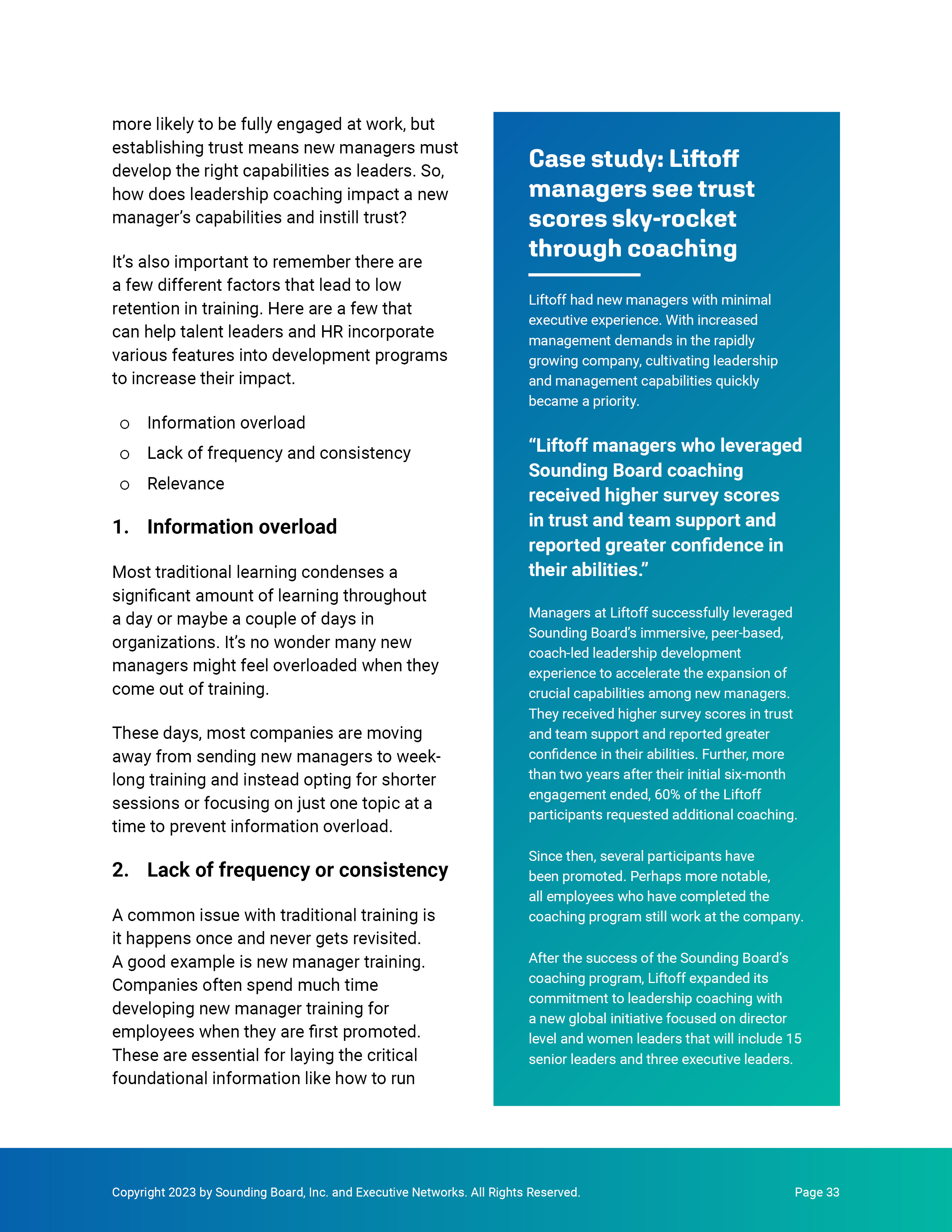
60%
Requested more coaching, 2+ years after the engagement ended.
100%
Of program completers still work at the company.
6mo
Initial engagement that set the whole program in motion.
18
Senior & exec leaders in the expanded global initiative.
Liftoff case study — trust scores sky-rocket through coachingChapter 8
— 06 / Impact
What it did
One asset for an underserved moment.
Because it led with usefulness instead of a pitch, the guide earned the read. It became a recurring asset in pipeline-creation campaigns and a credible point of view in a market that mostly invests in leaders late, making the case for early-career development to the talent and HR buyers who decide it.
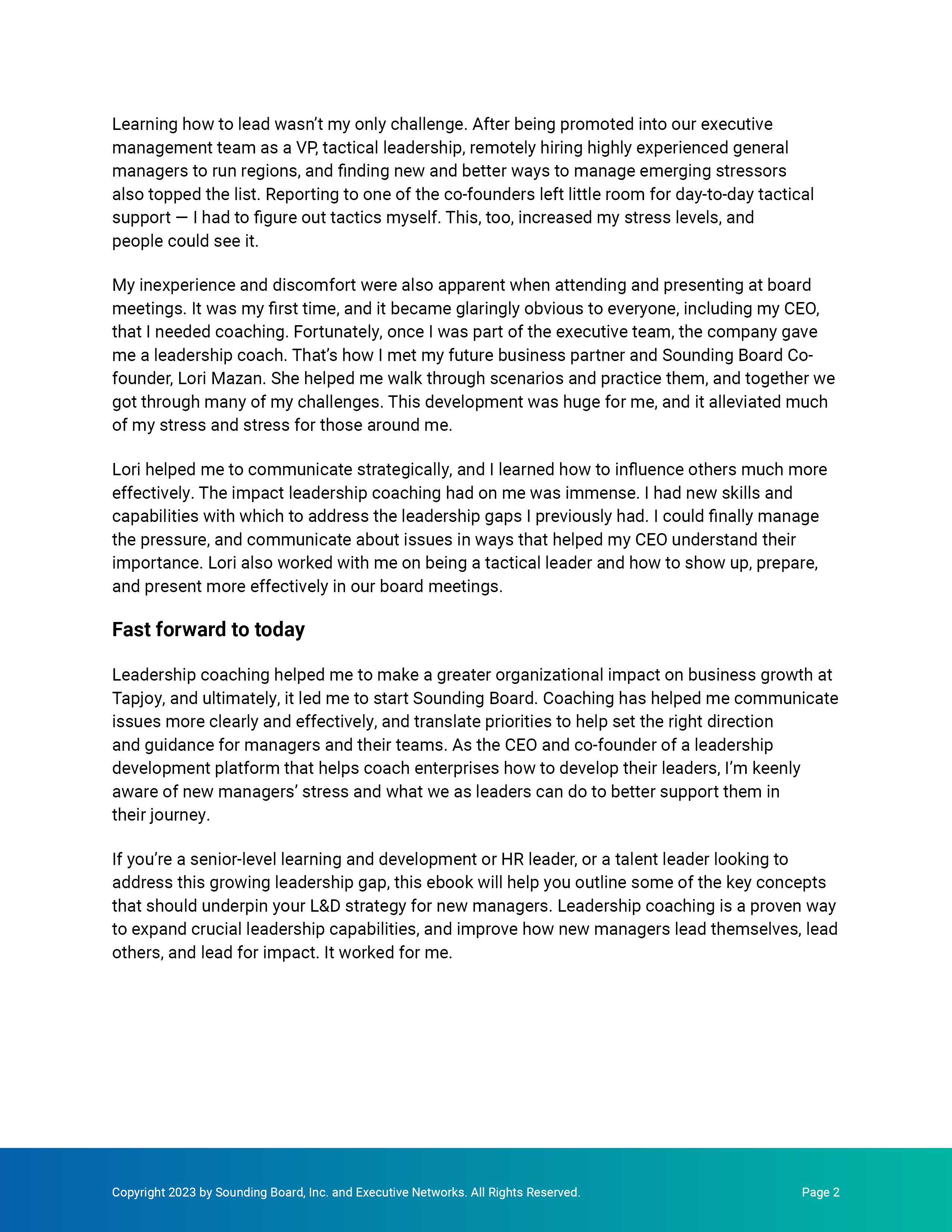
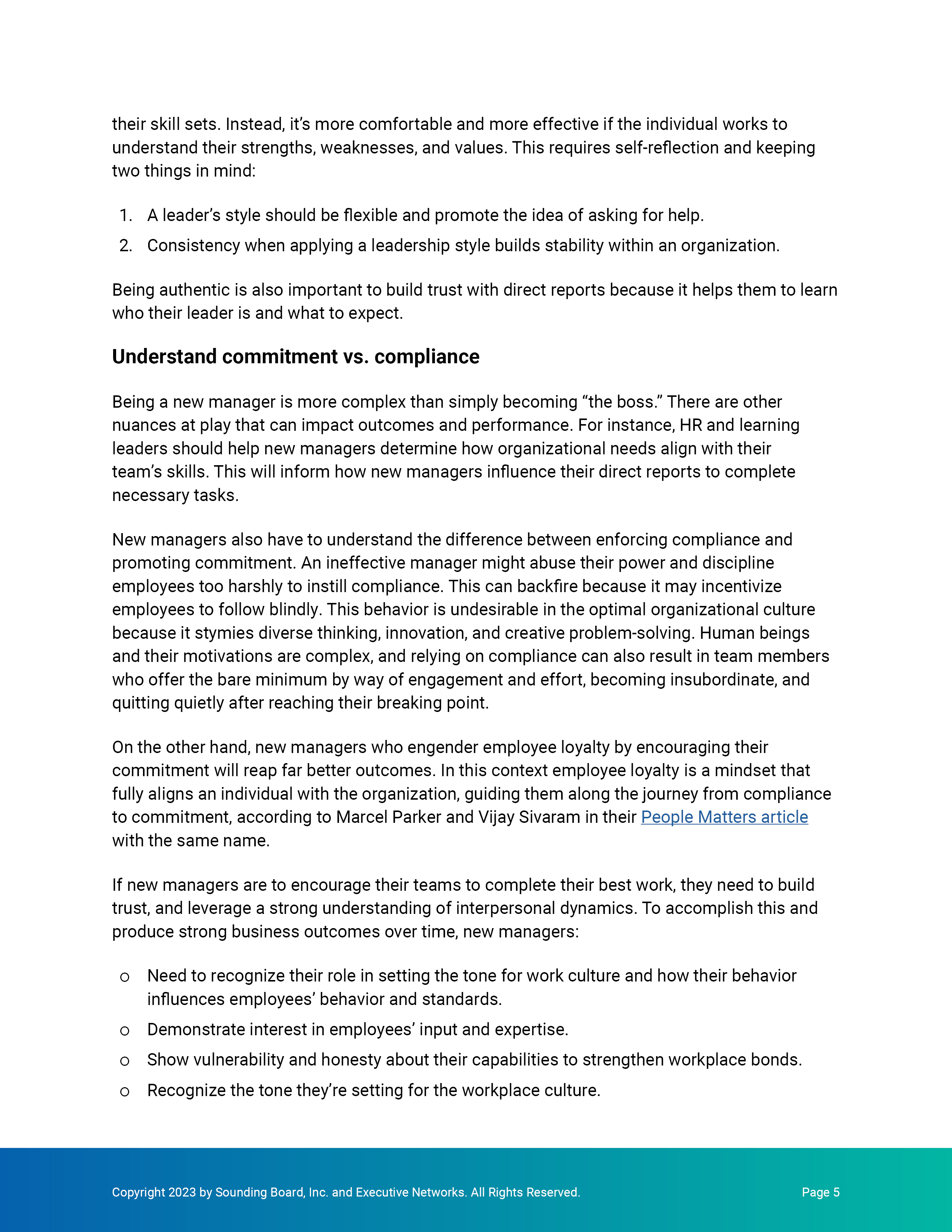
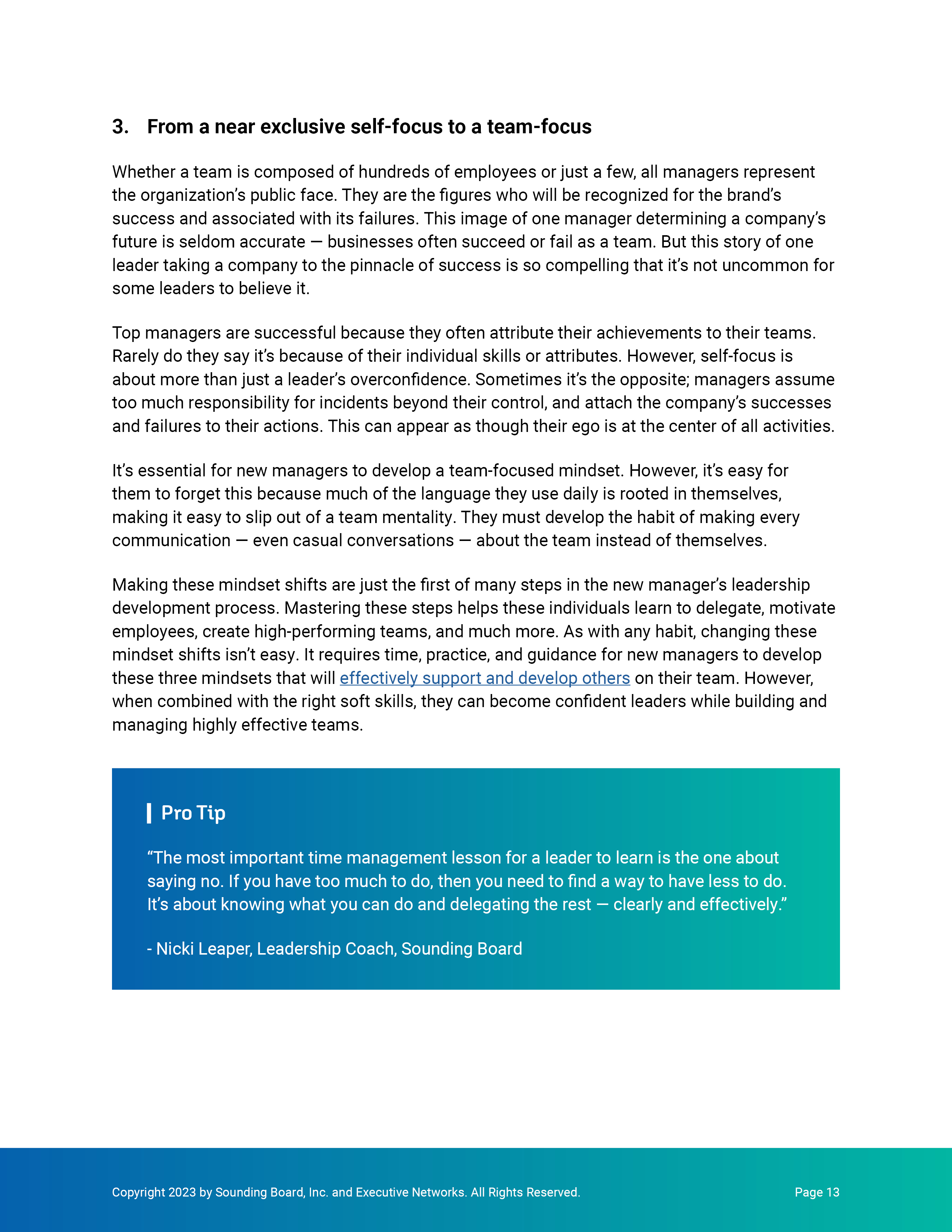
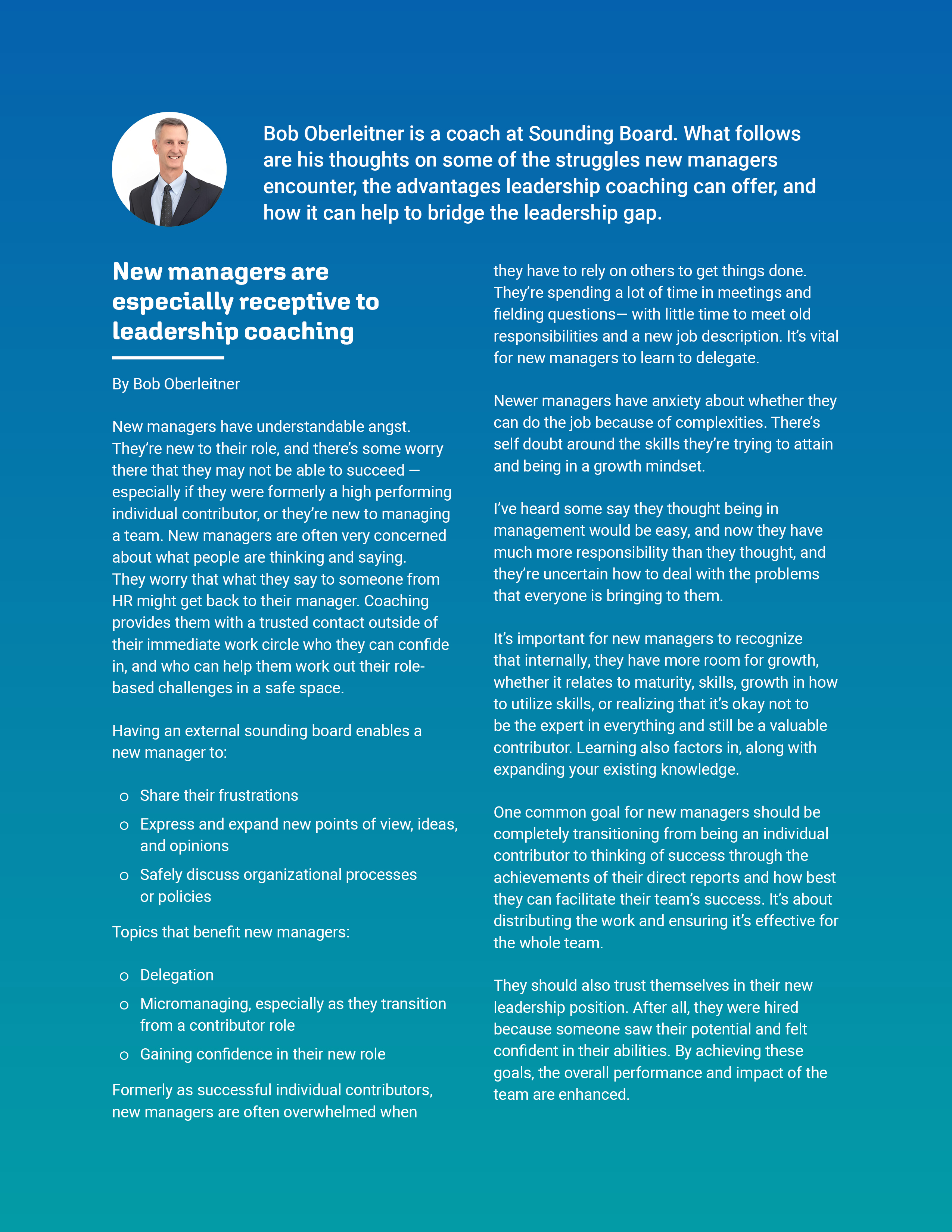
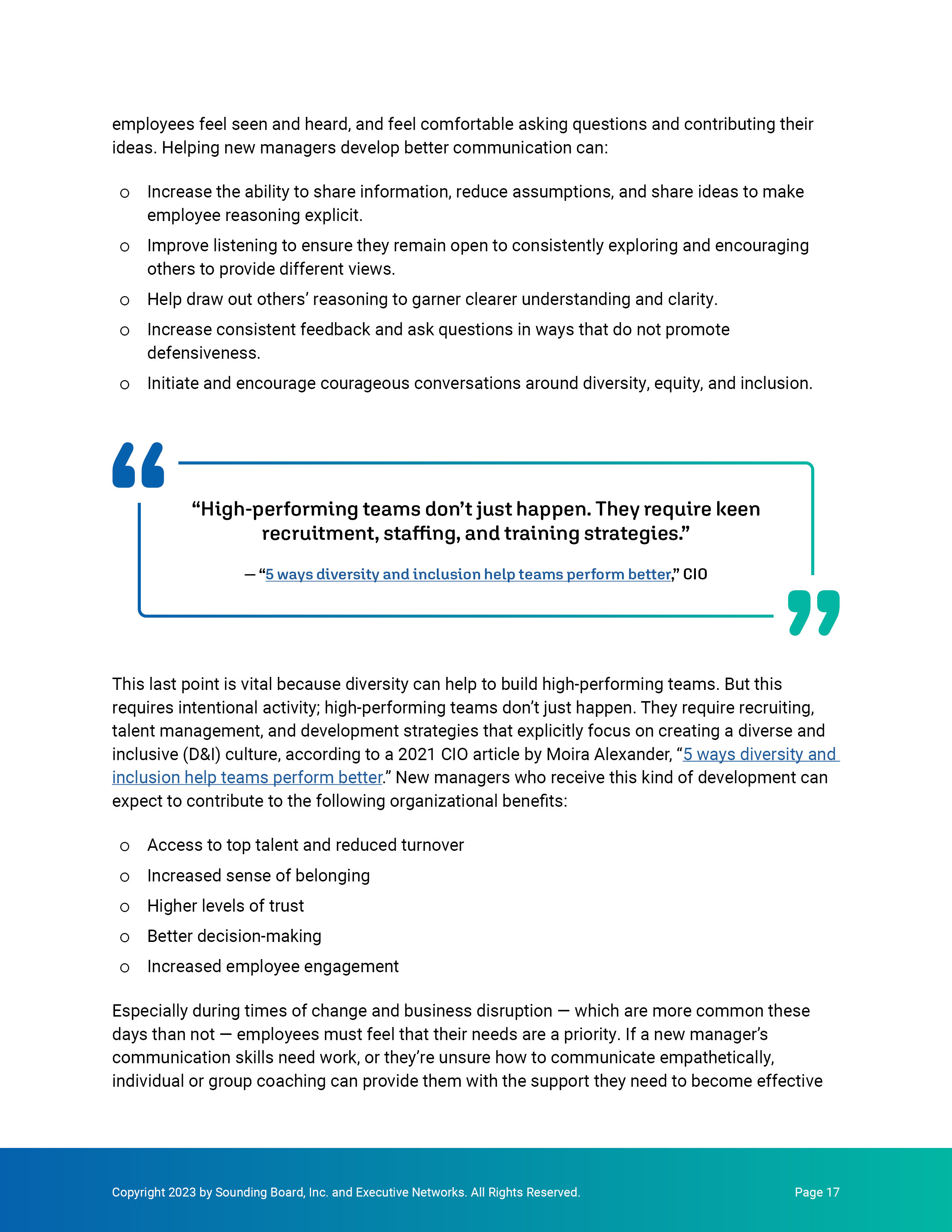
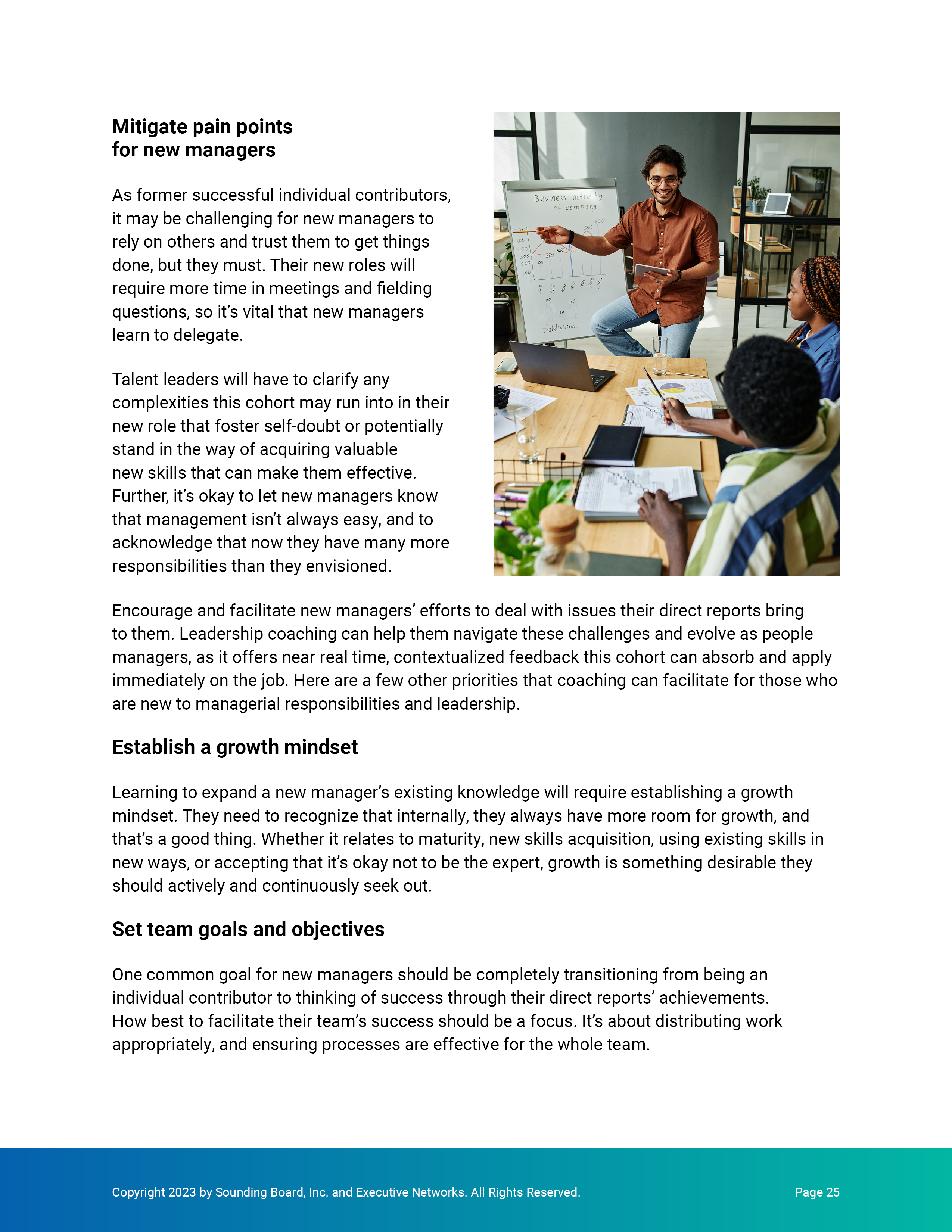
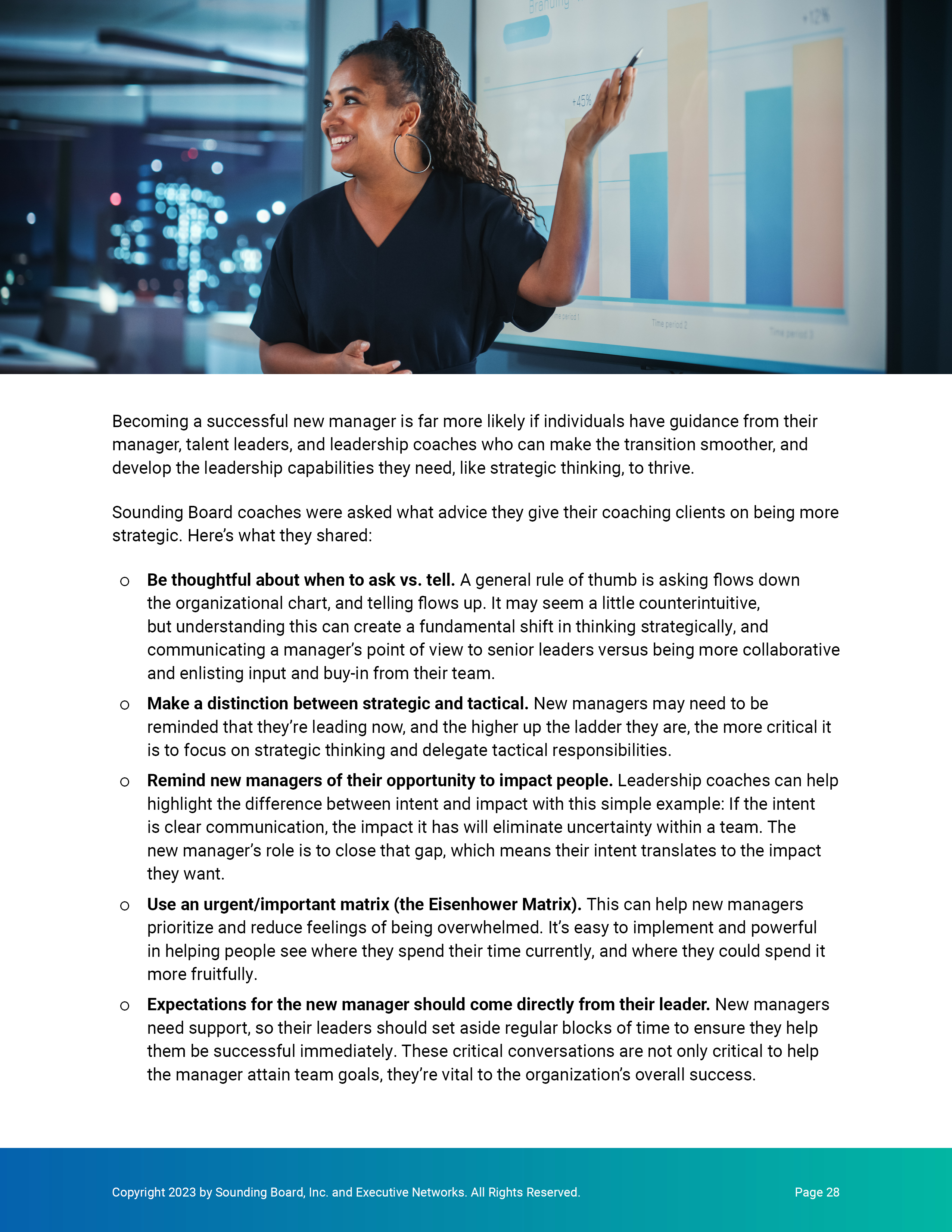
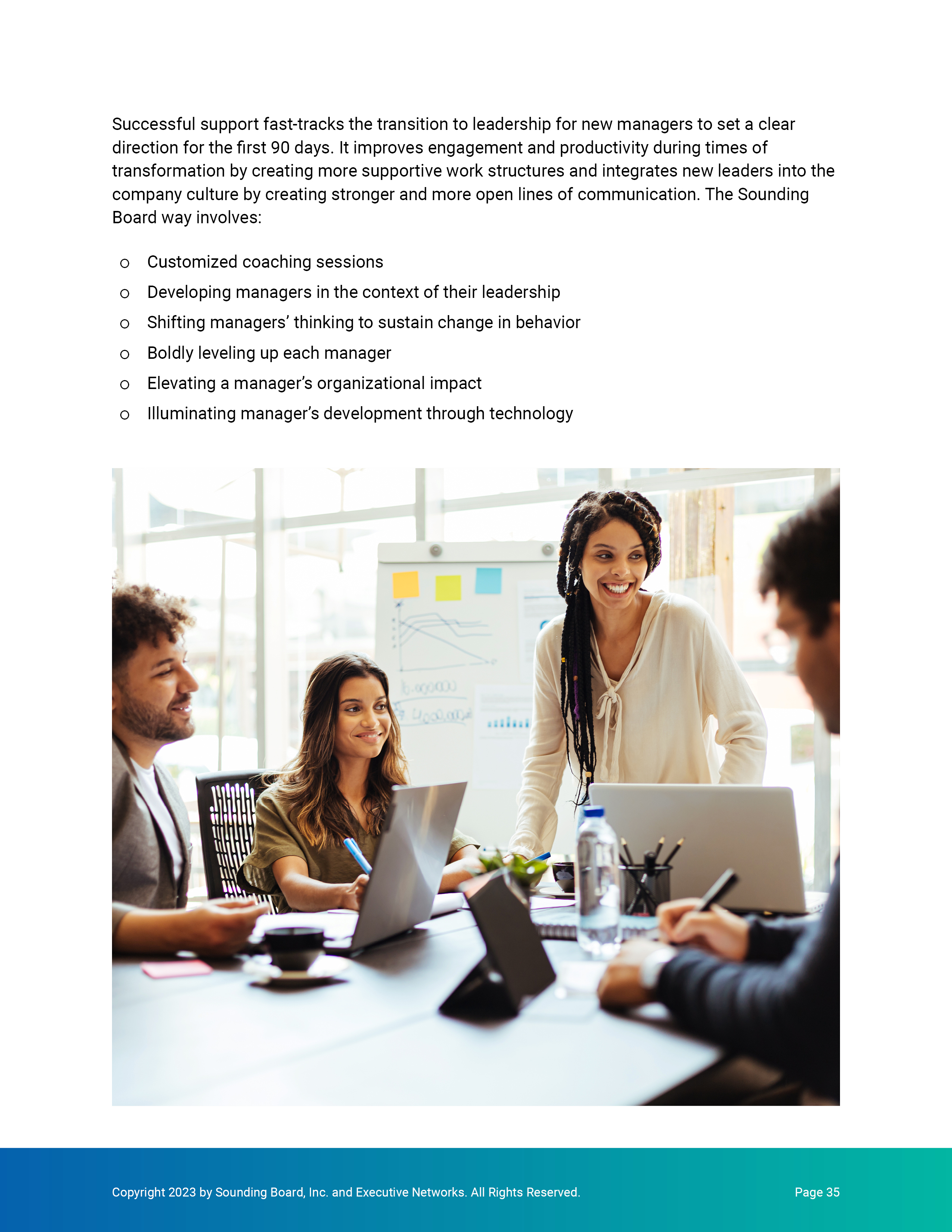
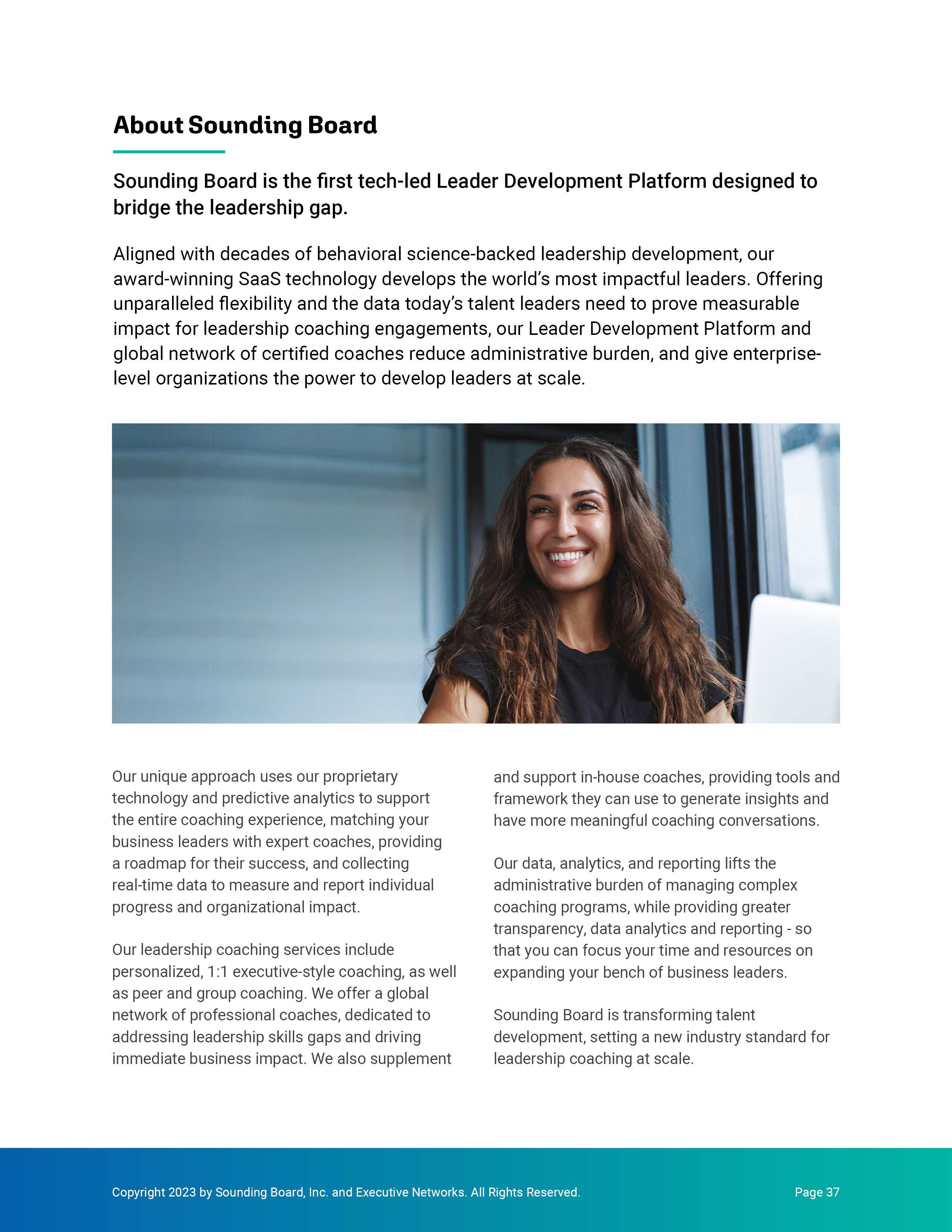
The full read — pull-quotes, coach essays, and case studies pace the 37-page interiorLead themselves, lead others, lead for impact
”
— The takeaway
Name the moment everyone else skips, lead with evidence, and a single asset can own a buyer segment the whole market neglects.
Peter Loebbecke · Creative Director