
 Peter Loebbecke · Sr. Creative Director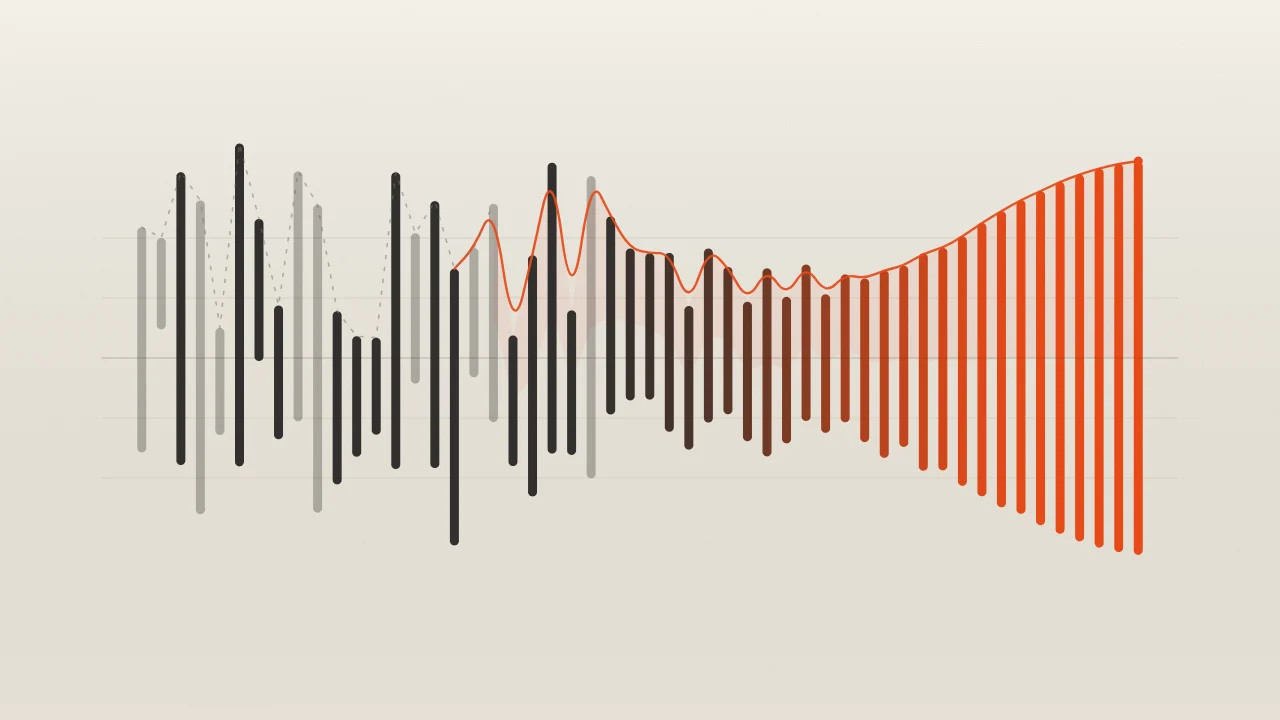
Sounding Board had built one of the most adaptive leadership-development platforms in its market. The product was strong; the funding was real; the team was sharp. But the brand still read like a coaching marketplace, and the creative came out of three or four different functions that did not talk to each other. Marketing made one thing, sales made another, product made a third, and a buyer moving across them felt the seams.
My job, as I came to understand it, was not to be the best designer in the building. It was to turn a set of disconnected instruments into something that could play together.
01 — Diagnose the silosIncoherence is a symptom.
The first month I made no new work. I made an inventory. Every deck, every page, every one-pager, every ad, laid out side by side. Seen together, the problem was obvious: there was no shared system, so every team had quietly invented its own. Five blues. Three logos. A dozen voices. None of it was bad; all of it was different, and the difference was the cost.
Silos are rarely a people problem. They are an absence problem, the absence of a center that everyone can build from. Naming that out loud, with the evidence on the wall, was what made the rebrand fundable.
02 — Build the centerOne system, shipped end to end.
We rebuilt the brand from the mark out: a confident, premium identity with a real type system, a disciplined palette, and a set of voice principles so the words matched the visuals. Then I did the part most rebrands skip. I designed everything downstream of the system, from sales decks to the marketing site to product UI, so the new identity shipped consistently the day it launched instead of leaking in over a year.
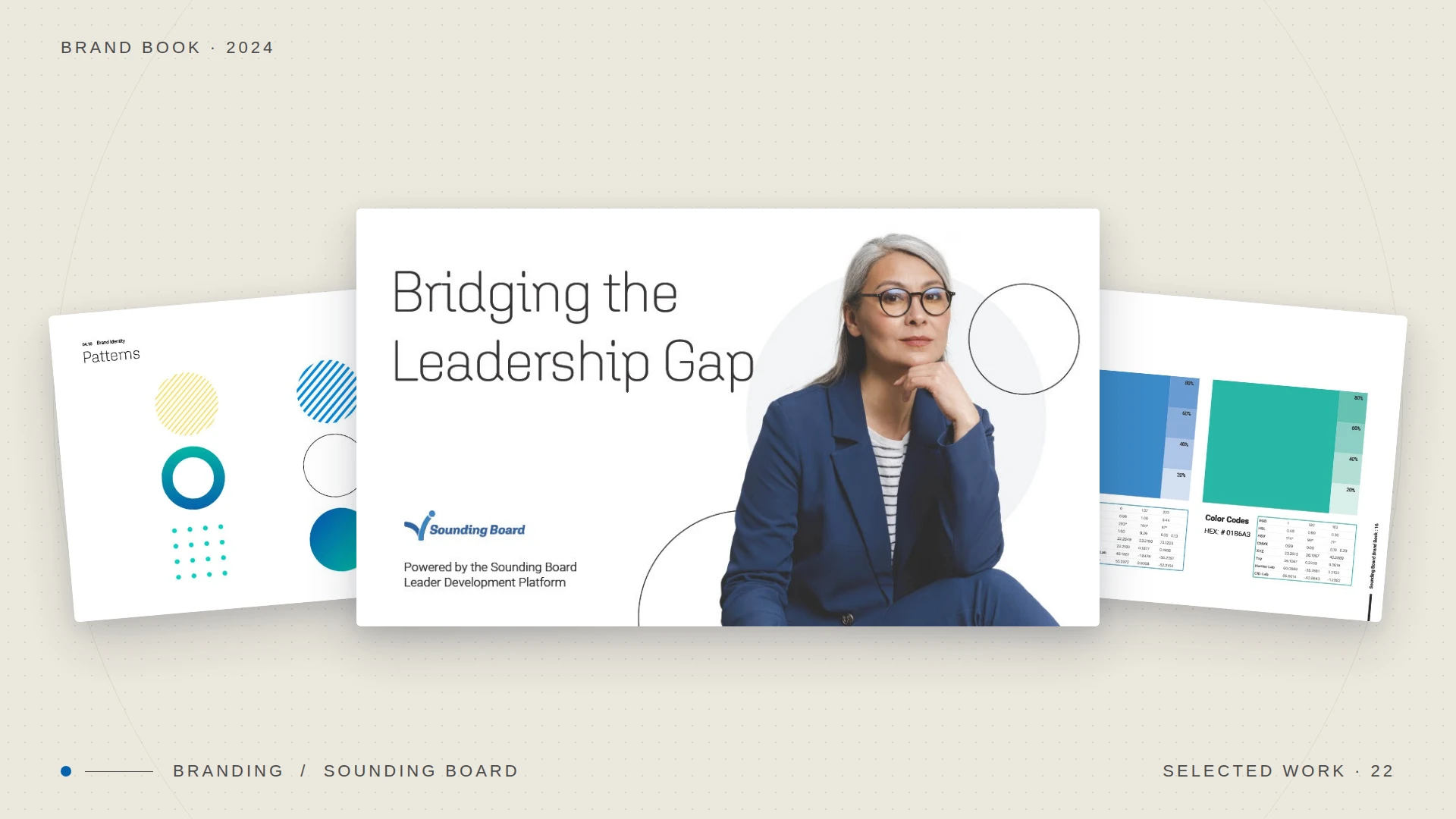
A brand system is not a logo and a color. It is a shared decision that ends a thousand future arguments before they start.On building the center
03 — Win the cross-functional roomAlignment is the real deliverable.
The hardest work was not design. It was alignment. A brand only becomes coherent when marketing, sales, and product all choose to ship through it. That meant sitting in their rooms, understanding what each function actually needed, and designing a system flexible enough to serve all three without fracturing. I stopped treating other teams as requesters and started treating them as collaborators with a stake in the outcome.
You do not get coherence by mandate. You get it by making the shared path the easiest one to take.
04 — Make it operationalTemplates so the system survives me.
A rebrand that depends on the creative director to enforce it is a rebrand with a short half-life. So we turned the system into infrastructure: component libraries, deck templates, a living brand kit, and enough documentation that a new hire could ship on-brand work in week one. The goal was a brand that held its shape whether or not I was in the room.
05 — What it added up toFrom recognition to revenue.
Within two quarters the system was producing measurable lift across every revenue surface, because every artifact was finally pointed at the same claim and the same customer. The identity helped anchor Fortune 500 client acquisition and supported a sharper market position. But the result I am most proud of is quieter: the company started to sound like one company. The instruments learned the same song.
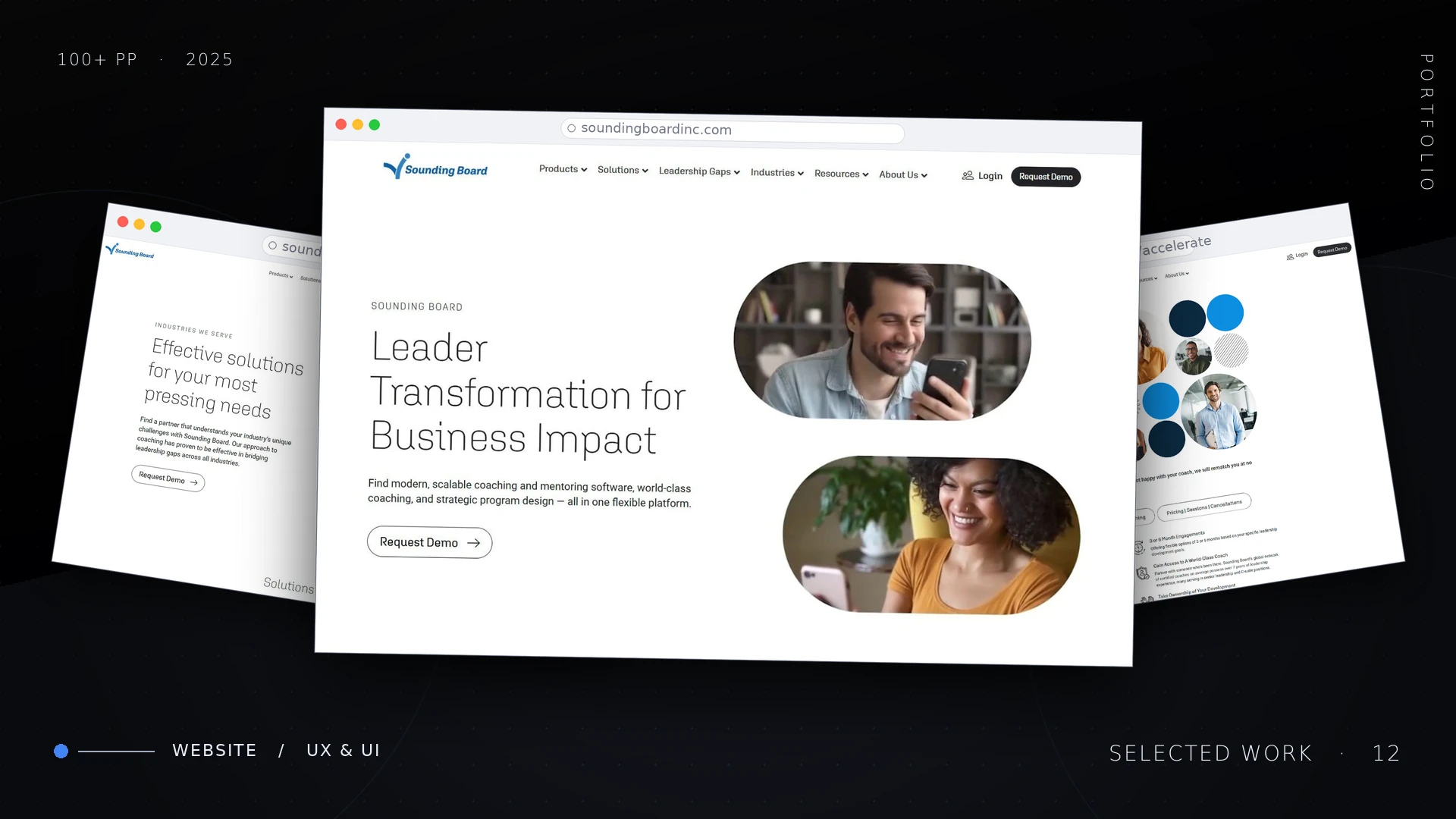
The lesson I took with me.
Coherence is not a design taste; it is an operational achievement. The most valuable thing a creative director can build is not a beautiful artifact but a center strong enough that everyone wants to build from it. Do that, and the symphony plays itself.
A fuller breakdown of the brand system, the marketing site, and the editorial work lives in the Work section. This essay is the story behind those artifacts.